Zeolites and the conservation of nutrients and water [Thesis]
Zeolite: conserving nutrients and water. Read the article below to find out how zeolite helps conserve nutrients and water and promotes sustainable agriculture.
Increasing urbanisation, water scarcity and the demand for more food require more efficient water irrigation. At the same time, they necessitate the application of more fertilisers. Retaining nutrients and water in agricultural soils leads to significantly higher yields. By the same token, it also prevents the pollution of water resources. According to a new study, one of the most effective solutions appears to be the use of natural zeolite.
zeolite is environmentally friendly, readily available and inexpensive, and can therefore be widely used in agricultural activities. This mineral is considered a soil conditioner and leads to an improvement in the soil’s physical and chemical properties.
The thesis
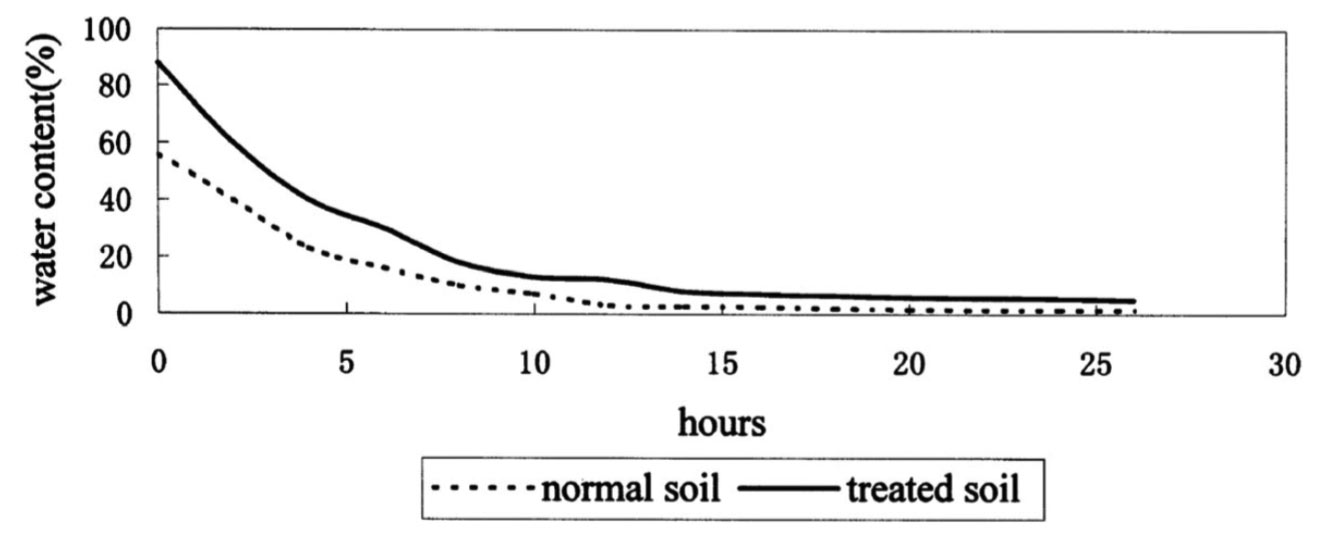
According to the data from the thesis, in soils enriched with zeolite, the rate of water infiltration improved significantly. The saturated hydraulic conductivity (Ks) and water-holding capacity (WHC) were also improved. The figure below shows the difference (up to 20 per cent) in water retention in sandy soil. The solid line represents soil enriched with zeolite and the dotted line represents soil without it.
Furthermore, the addition of zeolite significantly improved the soil’s cation exchange capacity (CEC). Natural zeolite can also effectively retain water and its nutrients, such as ammonium (NH₄⁺) and nitrate (NO₃⁻). In the same way, its unique porous structures retain phosphates (PO₄³⁻), potassium (K⁺) and sulphates (SO₄²⁻).
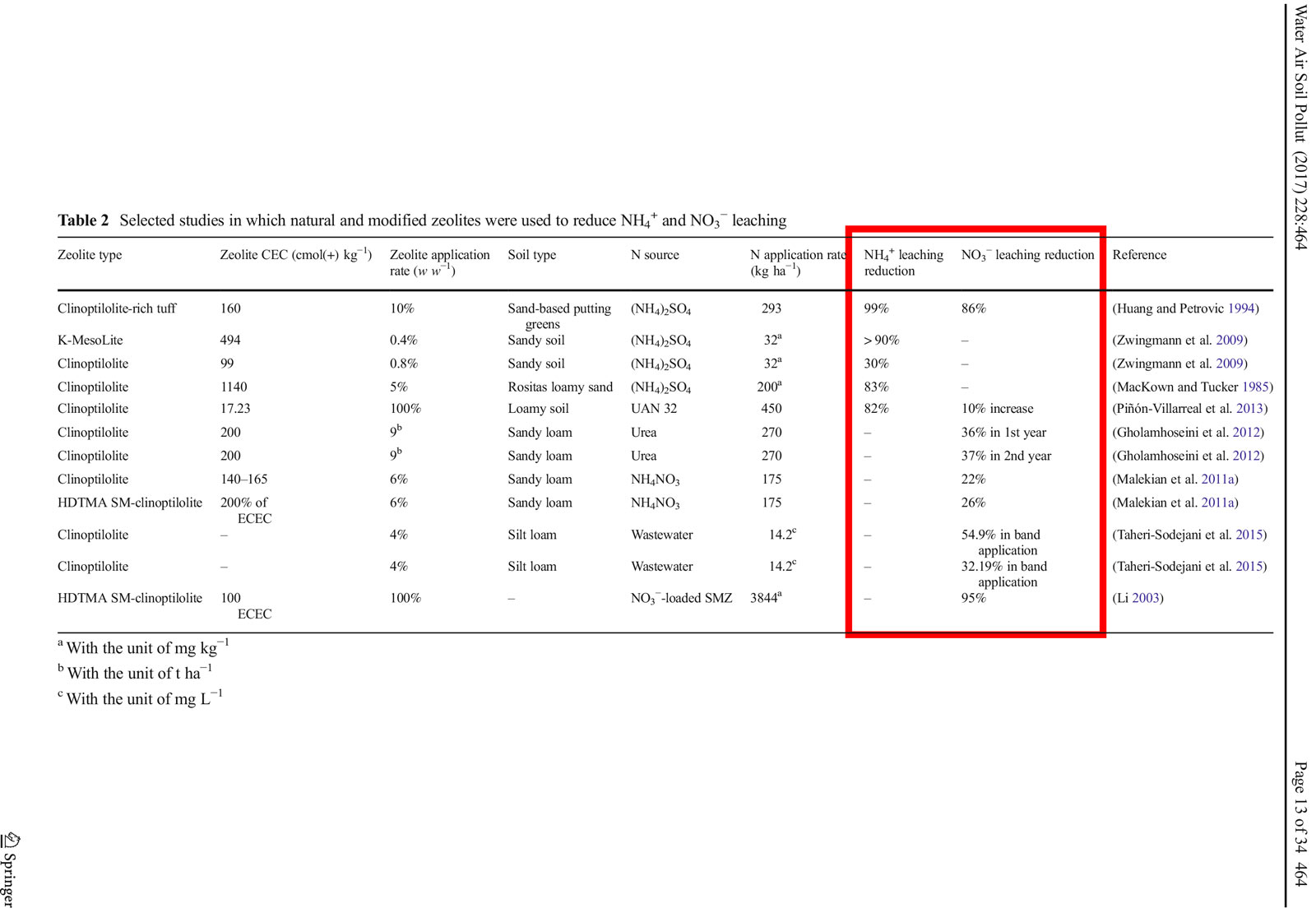
See the table below for the difference in the retention of ammonium and nitrate, which reaches 82 per cent and 36 per cent respectively from the very first year.
It is no coincidence that the fertiliser industry has been using zeolite in slow-release fertilisers (SRFs) for years.
In light of all the above, the application of zeolite can improve both water use efficiency (WUE) and nutrient use efficiency (NUE) in agricultural crops. In this way, it can reduce the risk of surface and groundwater pollution.
The benefits therefore appear to be very significant, as zeolites can yield significant results in crop growth as well as in the conservation of fertilisers and water.
Read the thesis below