3 tips for choosing the right zeolite for agriculture
Over the last five years, we have been working almost exclusively with zeolite, and we hear some people talking about its use in agriculture without seeing any significant results. We also hear in some cases that the results were not even visible. What is the reason for this? Why do these people not achieve the same results as others? Could it be, after all, that not all zeolites are the same? What should one look out for when choosing zeolite for their crops?
The use of natural zeolite in agriculture is very important, and we now know this from its countless applications. We also know a great deal from the wealth of scientific data that has been published over the years. Zeolite is already, and can become, a key tool for the development of agriculture in Greece.
Many people do not achieve the expected results simply because they do not know how to choose the right zeolite for their field. Consequently, they make the wrong purchases and do not get the most out of their investment.
The 3 key tips
Below you will find the 3 most important tips for choosing the right zeolite for agriculture. By following these tips, you will benefit from the significant properties of zeolite from the very first year.
In our opinion, the three most important tips are as follows:
- Choose the right type of zeolite, with a sufficient active ingredient content.
- Next, choose a zeolite for which there is substantial scientific literature on its use in agriculture.
- Finally, choose a zeolite that has already been used on a large scale in Greece. Furthermore, in every case, the results of its application must be as expected and exclusively positive. The third piece of advice essentially confirms the validity of the first two.
1. Choose the correct type of zeolite, with a sufficient active ingredient content.
There are more than 75 natural zeolites, whilst there are twice as many artificial zeolites! However, only a few of these are inert and possess the characteristics that make them suitable for use in agriculture.
Types of zeolite
The most widespread type of natural, economical zeolite in the world is clinoptilolite. In Greece, we are very fortunate, as almost all the zeolites sold are of this type. In our country, the word ‘clinoptilolite’ is rarely heard, as the general term ‘zeolite’ has become the norm, particularly in agriculture.
The extraction of clinoptilolite is usually a relatively straightforward process, mainly because it occurs in surface deposits in nature. It is also, relatively speaking, a soft rock, which makes it cheap to process and use in agriculture. All that is required is to crush it to the appropriate particle size, depending on its intended use.
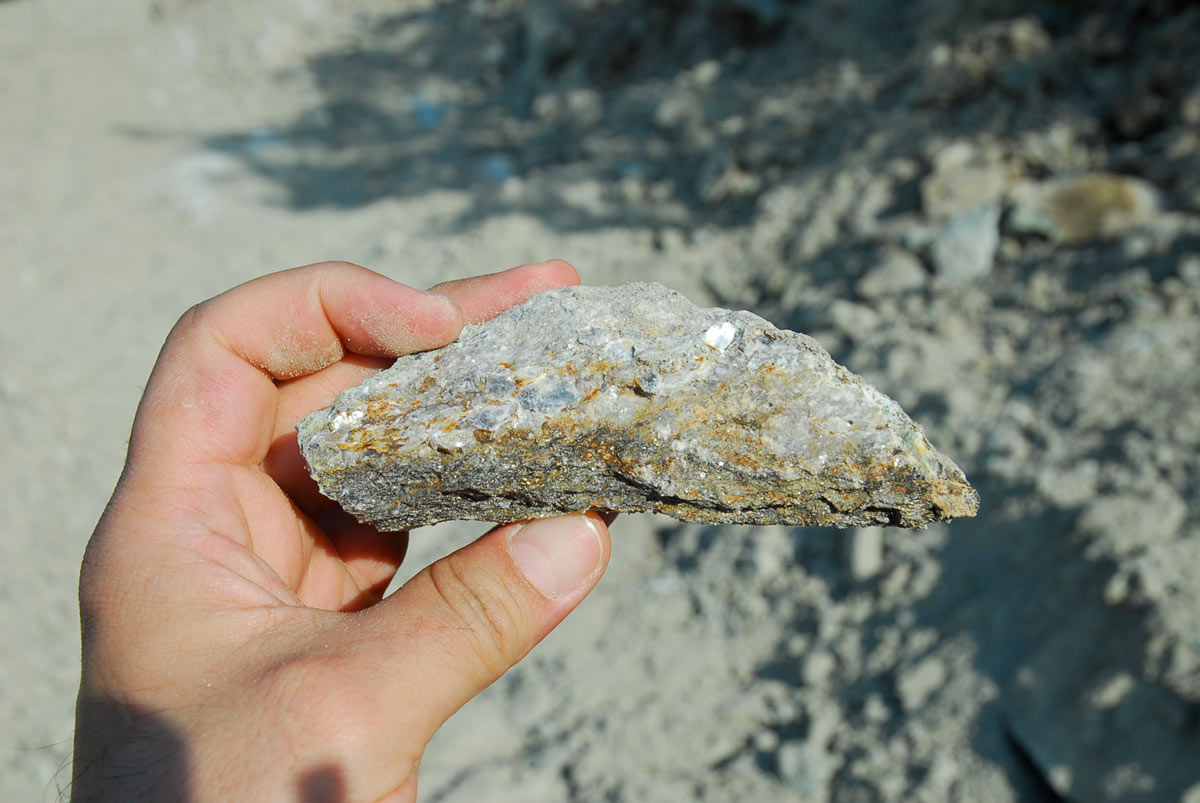
The structure and characteristics of clinoptilolite are such that they are extremely beneficial for its use in agriculture. This zeolite is considered one of the most microporous natural materials found in nature. This unique property makes this zeolite an excellent water retainer, a fact which maximises its benefits for agricultural use.
Another important property of this zeolite is that it is one of the few negatively charged substances found in nature. It therefore absorbs nutrients and trace elements, such as nitrogen and potassium, into its pores.
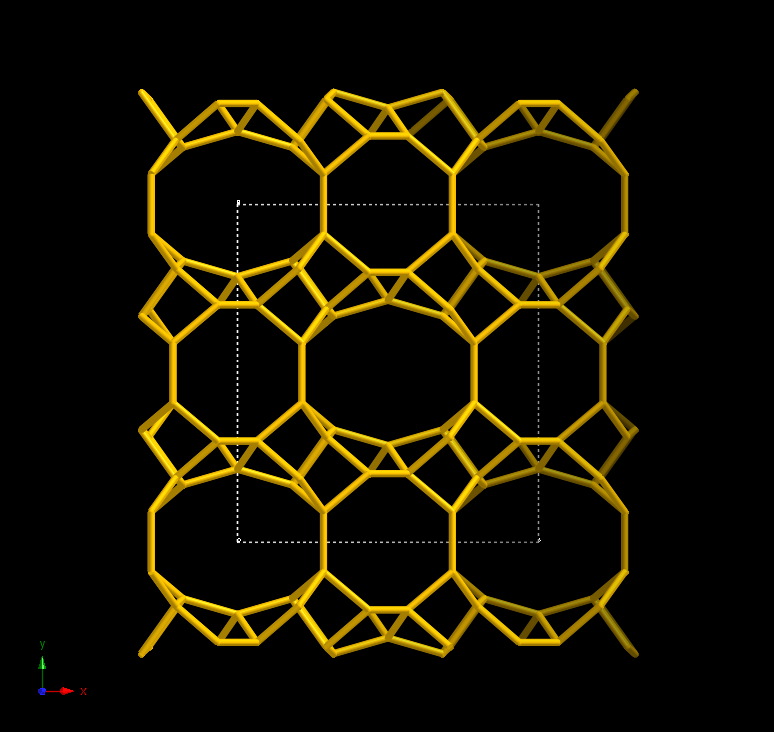
Its high cation exchange capacity (CEC) gives clinoptilolite the unique property of releasing onto its surface the elements it has adsorbed, when required by the environment. In this way, it supplies crops with water, nutrients and trace elements when these are required by the root system.
The rate at which this particular zeolite releases nutrients and water is also very important. It achieves optimal management, which is essential for crops to grow properly.
Furthermore, once clinoptilolite is incorporated into the soil, it begins to purify it of heavy metals, toxins and free radicals. It also absorbs and permanently retains within itself compounds with a large molecular structure. These substances usually originate from pesticide and chemical residues and can hinder crop growth.
The active substance content of zeolite.
Zeolite tuff – that is, zeolite rock as it occurs naturally – always contains a specific percentage of clinoptilolite. This is due to the way the rock is formed and varies significantly from one deposit to another. In the wider Balkan region, these deposits are volcanic and sedimentary in origin, formed from the accumulation of solid volcanic ejecta.
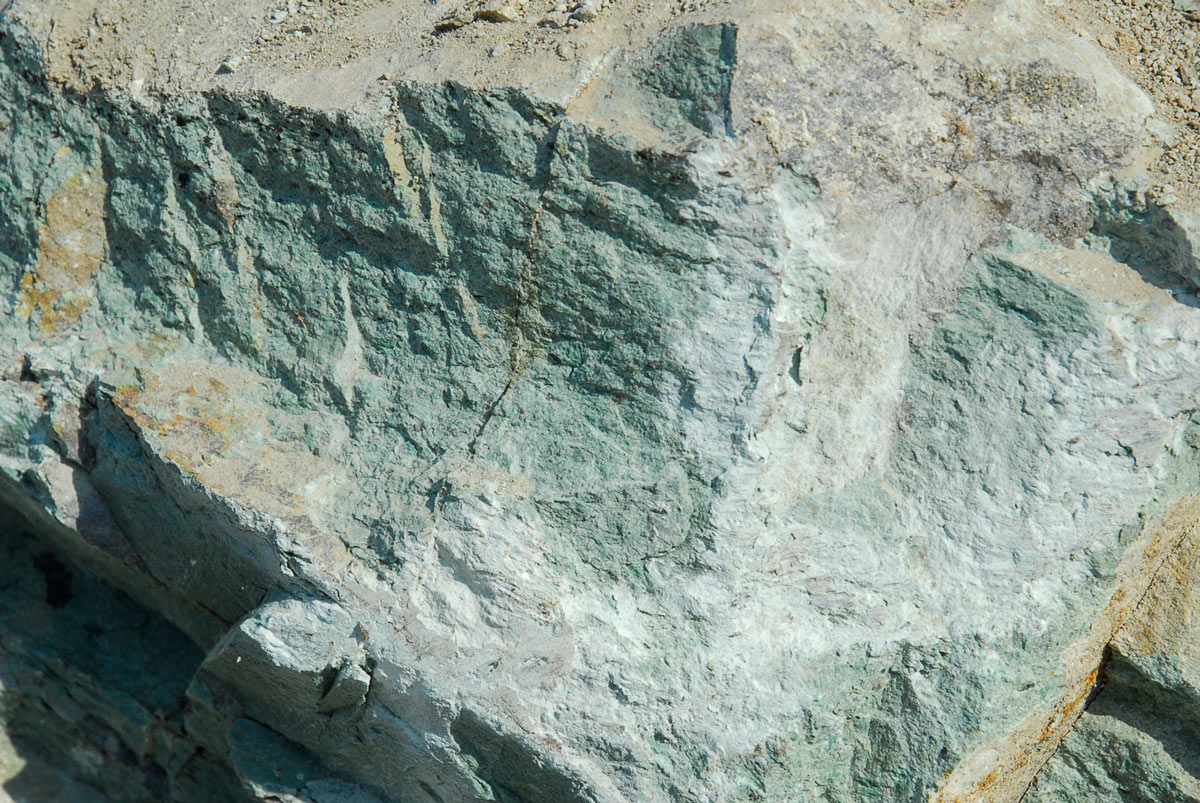
Deposits with a clinoptilolite content of less than 75 per cent are not worth utilising, as the active substance is insufficient for agricultural use. The European Union, in a directive dating from 2005, encourages organic livestock farmers and arable farmers to use clinoptilolite with a content of at least 85 per cent. It would therefore be wise to choose a zeolite with at least this level of content if we wish to achieve the desired results from its use.
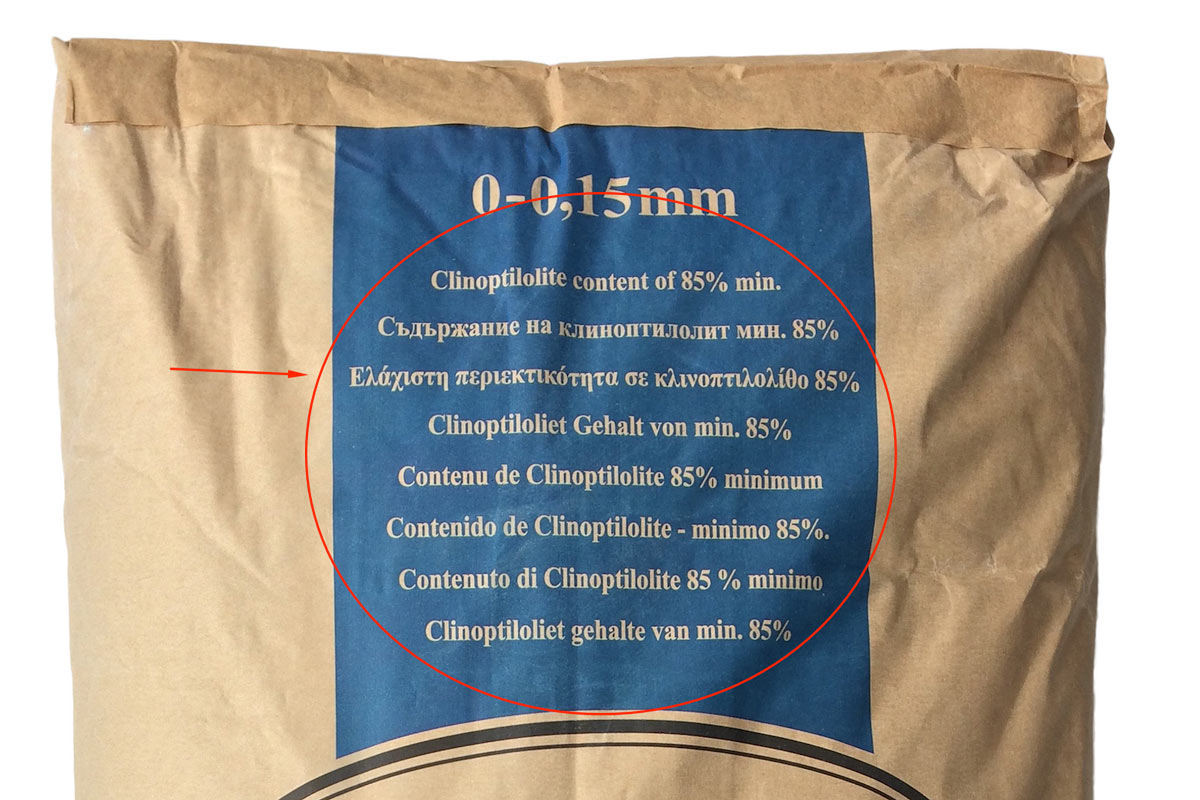
The consistency of each deposit is also important. A deposit may have a different composition in each of its layers and may even vary from metre to metre. One way to be sure of the percentage of clinoptilolite present in the zeolite we are buying is for this to be clearly stated on the packaging.
It is also important that the packaging states how its production is certified. Here at Zeolife, we recommend only certified natural zeolite in pre-printed paper packaging straight from the factory, with all the necessary characteristics mentioned above clearly stated. This ensures we can be certain of its clinoptilolite content, for every particle size distribution and in every individual batch.
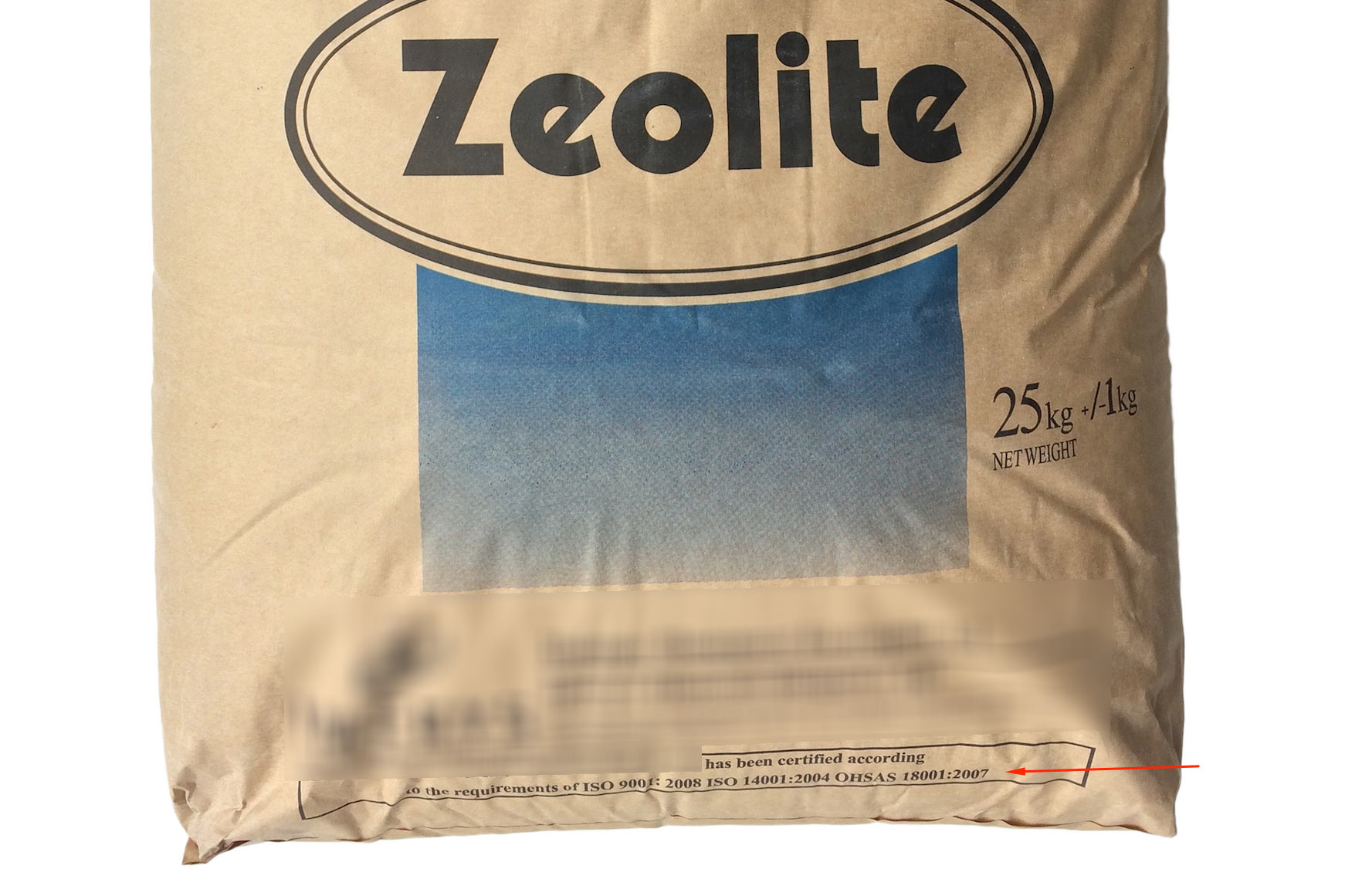
We also carry out chemical analyses at certified laboratories at regular intervals to verify the stated specifications.
The correct particle size distribution of zeolite.
Zeolite can benefit all types of crops, in all types of soil. It is true that, as part of its effectiveness lies in its pores, the more finely ground it is, the more effective it becomes. However, by adding it, we aim not only to manage nutrients and water, but also to correct the soil’s particle size distribution.
Thus, a light or heavy soil can be balanced towards the mean simply by adding zeolite of the correct particle size. This improves the soil’s properties and makes the management of water and nutrients easier. This has a direct impact on the quality and quantity of production, as well as on the conservation of resources such as fertilisers and water.
2. Choose a zeolite for which there is substantial scientific literature on its use in agriculture.
A simple online search will immediately reveal that most theses have been written and most studies carried out on clinoptilolite for agricultural use. This makes sense, as its characteristics and properties, as mentioned earlier, make it well-suited for agricultural use in many ways.
Farmers’ use of clinoptilolite began in the 1970s, specifically in 1967. The first study and application took place in Taiwan, where natural zeolite was used in tomato cultivation on sandy soils. The next application to soil took place in rice cultivation, also in Taiwan, in 1968. This study reported significant nitrogen retention efficiency, at rates of up to 63 per cent.
Since then, countless studies have been published on the use of natural zeolite in agriculture, all over the world, for almost all types of crops and soils. In every case, the results of its use are measurable and consistently positive.
As you can see, this gives us yet another significant advantage over other types. We can find out about its uses in agriculture immediately, easily and, most importantly, with scientific confirmation. Only on our website can you find more than thirty published studies and theses on zeolite in agriculture.
3. Choose a zeolite that has already been used on a large scale in Greece. Furthermore, in every case, the results of its application should be as expected and entirely positive.
In recent years, Greece has pioneered the use of natural zeolite in agriculture. Since 2013, its application has been rolled out on a massive scale, in both small- and large-scale crops. By carefully following the two pieces of advice mentioned above, over the last five years we have seen nothing but positive and significant results in all its applications. This equates to 100 per cent success, which confirms that the zeolite we recommend is the right choice.
On our website, you can view most of these applications and get in touch with the growers themselves. This way, you can hear about the results directly from them.
Equally important is our involvement in research and our collaboration with educational institutions across the country in this field.
We recently published on our website a study by the University of Patras, which investigated the effectiveness of natural zeolite in removing ammonium ions from synthetic wastewater and from whey. The aim of the study is to recover nitrogen-containing nutrients using zeolite. These can then be used for further applications, such as slow-release fertilisers.
See the study publication at this link
Read here about the use of zeolite in agriculture.
See this link on our website for all the products available for agriculture.
Read an important thesis on zeolite in agriculture via this link on our website.
View the table of products manufactured in Greece using natural zeolite here on our website.
Click on this link, which opens in a new window, to the International Zeolite Association’s page on the chemical characteristics of clinoptilolite.