

Diatomaceous Earth – Applications in Livestock and Poultry Farming
Diatomaceous earth (diatomaceous soil, or clay-rich diatomite) is a natural, inert mineral material consisting of fossilised microscopic algae shells (diatoms), the main component of which is silicon (silicon dioxide). After extraction and grinding, a very fine, light-coloured powder (flour-like) – essentially a form of amorphous silica – with a porous nanostructure and sharp micro-edges. Edible (uncalcined) diatomaceous earth is non-toxic to humans and animals (it is in fact authorised as a feed additive by the FDA), but it is lethal to many insect and arthropod pests due to its mechanical action. [1] [2]
General Information on Diatomaceous Earth
Mechanism of Action
The sharp, microscopic surfaces of the particles cut or scrape away the cuticle (lipid coating) of the insect’s exoskeleton, whilst their high absorbency dehydrates the pest, leading to death by dehydration. The action is purely natural/mechanical – it is not a chemical insecticide – so it does not lead to resistance in pests and is safe for use in organic farming. However, as it is a fine silica powder, inhalation should be avoided during application (it may irritate the respiratory tract). Food-grade diatomaceous earth contains only amorphous SiO₂ (safe), whilst calcined diatomaceous earth (e.g. for swimming pool filters) contains crystalline silica and must not be used on animals or in livestock housing. [3] [4]

The photograph shows a microscopic illustration of how diatomaceous earth works. On the left, a diatomaceous earth (DE) particle penetrates the exoskeleton of a cockroach. On the right, the fossilised diatom shells with sharp edges cause multiple cuts in an insect’s exoskeleton, destroying its lipid layer – the insect loses moisture and dies of dehydration
The effectiveness of diatomaceous earth is directly linked to its particle size (particle size distribution) and purity. For insecticidal action, a very fine-grained form is recommended. Ideally, particles should be <20 μm, as the smaller they are, the better they adhere to and injure the pests. Typically, diatomaceous earth powders have a particle size range of 2–30 μm and are best suited for insect control and as feed additives. In contrast, coarser grains (50–1000 μm) are not as effective and may clog sprayers or remain undissolved in the mixture. In conclusion, for applications in animal husbandry, we use fine-grained food-grade diatomaceous earth (unrefined, non-heat-treated) in the form of an extremely fine powder [2] [12] [20 micro πούδρα — 20kg σακί]
Full Technical Report – Use, Dosages & Studies
This section provides a detailed overview of how diatomaceous earth is applied in livestock and poultry farming, the recommended dosages and the available scientific findings (studies, theses) regarding its effectiveness.
Spraying with a Water-Based Suspension (Liquid application)
Particle size distribution & solubility
Diatomaceous earth does not dissolve in water – it is used as a suspension of fine particles. To be sprayed effectively, very fine powder of at least 20 microns is required (so that it remains suspended) and the solution must be stirred continuously, as the particles settle quickly. [13] Experience has shown that if coarse-grained diatomite is used, the suspension ‘settles’ and clogs the sprayer nozzles – as you mention, this happened with another company’s product. Consequently, the correct particle size distribution (fine powder <20 μm) and continuous stirring are crucial for trouble-free spraying.
Dosage – Suspension concentration
Relatively low to moderate concentrations of powder in water are recommended, depending on the spraying equipment:
- A mild dosage is ~0.5% w/v (weight/volume), i.e. approximately 1 tablespoon of diatomaceous earth per 1 litre of water. This ratio is used, for example, for spraying gardens to control fleas.
- For more extensive applications on fields or trees, stronger mixtures have been used, e.g. 60 g of powder per 1 litre of water (~6% w/v), which require more professional sprayers.
- A suitable dosage is 4 per cent by weight/volume of water, i.e. 40 grams of powder per litre
Start with a lower concentration (0.5–1%) on a trial basis and adjust according to your needs and equipment. Bear in mind that a more concentrated suspension increases the risk of nozzle blockage, especially in standard sprayers – which is why more dilute ratios are safer to start with. A small amount of mild soap or washing-up liquid can also be added to the mixture as a surfactant, to help disperse the particles more effectively and prevent them from clumping together (this helps ensure a uniform spray).
Spray application – advantages
Liquid application helps to ensure the even distribution of diatomaceous earth on surfaces or onto the animals’ bodies, avoiding dust during application. However, please note that it is not effective when wet. Once the suspension has been sprayed and has covered the desired surfaces, it must dry before the fine powder residue can begin to act as an insecticide. Essentially, the water acts as a carrier: it transports the powder and, once it has evaporated, a thin layer of diatomaceous earth remains adhered to the surface. Therefore, after spraying, allow the area or animal to dry thoroughly – the diatomaceous earth that settles will kill any pests it comes into contact with.
To spray on animals: this is possible, although it is usually applied as a dry powder (see next section). When spraying, ensure that the animal’s coat or plumage is evenly wetted. As it dries, the fine powder will disperse throughout the fur. Take care to ensure they do not swallow or inhale large quantities during spraying – apply in a well-ventilated area and avoid the head region (eyes, nostrils). Once dry, you can gently brush the coat to remove any excess powder.
Quick tips for spraying
- Use fine-grained diatomaceous earth (20 microns).
- Shake the spray container continuously or frequently (the particles settle quickly).
- Apply in dry conditions and allow time for the surface to dry after spraying (moisture drastically reduces effectiveness). For example, choose a day without rain or high humidity, and spray in the early afternoon so that it dries before the dew sets in.
- Protect yourself (mask, goggles) and keep animals out of enclosed spaces until the dust has settled, so that they do not inhale it whilst it is airborne.
- Repeat the application at regular intervals, as the dust may be blown away by the wind, washed away by water or stirred up by the animals’ movements. Usually, repeated spraying once a week for approximately 4 weeks helps to gradually reduce populations (as new generations of parasites hatch).
Dry Application – Dusting Animals & Areas (External use)
The most common method of using diatomaceous earth against external parasites is to apply the dry powder directly to the animals and their surroundings. The dry powder acts immediately upon contact with the parasites (no drying time required)
Application to animals (furred/feathered)
Diatomaceous earth can be applied directly to the fur or plumage to treat fleas, ticks, lice, mites and other ectoparasites. It is used in a similar way to the old-fashioned ‘lice powders’. For example: lightly sprinkle the powder along the animal’s spine and rub or brush gently so that it penetrates down to the skin. Wear gloves and a mask, and avoid the animal’s face. In animals with fur (dogs, cats, cattle, sheep and goats, etc.), work the powder into the fur using your fingers or a brush. For poultry, it can be applied under the wings, around the cloaca and on the breast, or a container or basin of fine powder can be left out for a dry bath so that they can take a dust bath on their own (birds have an instinct to roll in dust to rid themselves of parasites).
A typical prevention programme
involves repeating the dusting once a month or every 2–3 weeks during the high-risk period, so that any newly emerging fleas, ticks, etc., are killed. Specifically for ticks, it is recommended that, following general dusting, you check for attached ticks and dust them thoroughly locally (ensuring direct contact between the powder and the parasite).
Clinical reports indicate significant efficacy: a diatomaceous earth product registered as an insecticide (DEsect) is approved by the EPA for direct use on animals (livestock, poultry, pets) and is reported to safely control fleas, mites, ticks, lice and other parasites. No animal quarantine is required (zero withdrawal period) as it is not a chemical.
Application in the environment – premises & bedding
The soil mixture can (and is recommended) also be used in the animals’ environment for broader parasite control. For example:
On bedding, in cages and on the floors of livestock housing
Sprinkle a thin, even layer of powder over the bedding (straw, sawdust, etc.) or into cracks in floors/walls, in corners and generally wherever parasite eggs or larvae may be lurking. For example, in henhouses, it is sprinkled into the nests, into the crevices where red mites hide, and on top of or inside the dry bedding. In stables, the floor can be dusted before fresh straw is laid, and the straw itself can be dusted periodically. Aim: to kill not only the adult parasites moving about there, but also their larval stages (eggs, larvae, pupae) which are often found in the bedding or in cracks in the enclosure.
Studies have shown that this practice reduces pest populations in the environment: For example, in birds’ nests, the application of diatomaceous earth significantly reduced the number of blowfly larvae and bird fleas living there. The fleas, in fact, appeared to be more vulnerable (probably due to their smaller body size, which dehydrates more quickly). Similarly, in poultry farm experiments, it was found that diatomaceous earth can control infestations by the red poultry mite (Dermanyssus gallinae) – in fact, it is one of the most widely used biological control methods for this mite in Europe. Mites that come into contact with the dust die from dehydration, although a higher dose or repeated applications may be required (it has been observed that different types of diatomaceous earth have varying levels of effectiveness against mites, so the best quality is required). Furthermore, recent research confirms the control of other ectoparasites: e.g. in hens, the presence of diatomaceous earth in the enclosure significantly reduces the Northern Fowl Mite and body lice in hens. [5]
In manure and the parasites it contains
A particular question concerns the effect on the worms/larvae of endoparasites that are excreted in the droppings (e.g. earthworm eggs, nematode or coccidian larvae in litter/manure heaps). Given that diatomaceous earth acts mechanically by drying out, it may indirectly reduce the viability of such life stages in the environment: it keeps the litter and manure drier (due to its absorbency), which hinders the development of many parasites that require moisture. There are not many specific studies on worm eggs in the bedding, but it stands to reason that drier bedding containing diatomaceous earth would reduce the chances of them hatching or developing. Furthermore, if the dust comes into direct contact with parasite larvae, it may cause minor damage to their cuticle (nematodes have a cuticle that can be abraded by silica). In laboratory studies, it has been shown that diatomaceous earth can inhibit the motility of infective nematode larvae: in in vitro tests, a concentration of ~1 mg/mL caused ~67% inhibition of the migration of bovine nematode (Oesophagostomum) larvae within 24 hours. This suggests that diatomaceous earth does indeed damage the protective coating of the larvae and reduces their motility and survival. Overall, whilst further research is needed, the use of diatomaceous earth in the litter/environment is considered to help reduce the ‘recycling’ of parasites (both ectoparasites and endoparasites) in rearing facilities, thereby enhancing biosecurity. [14][1][2][5]
Addition to Feed – Endoparasites & Productivity
An extremely important area of application is the incorporation of diatomaceous earth into animal feed (as a feed additive). This practice is primarily aimed at combating internal parasites (internal worms, coccidia, etc.) in a natural way, as well as to improve animal health and performance. Indeed, food-grade diatomaceous earth has multiple properties: in addition to being a potential natural anthelmintic, it acts as a digestive aid/trace element supplement (it contains ~15 beneficial trace elements), a mycotoxin binder and an anti-caking agent for animal feed (it keeps feed dry by preventing the growth of mould). All of these can benefit productivity. [6][14]
Dosage in animal feed
It is generally recommended to mix ≈2% by weight of diatomaceous earth into the dry feed of ruminants and other animals. In practice, this means 20 kg of diatomaceous earth per tonne of feed, or 20 g per kilogram of feed mixture. In terms of a daily ration, for example, a cow consuming 10 kg of concentrate will receive ~200 g of diatomaceous earth per day. To simplify matters, many livestock farmers mix, for example, 1 sack (20 kg) of diatomaceous earth into 1 tonne of feed. Similar proportions (1.5–2 per cent) have been tested for poultry and pigs, whilst for small animals (rabbits, pets) ~1 per cent of the diet is often provided. Note: It is an inert material, so these quantities do not adversely affect the composition or taste of the feed (most animals do not even notice it, whilst some say that cattle seek it out because of the trace elements). In fact, there is a reported case where young heifers, each of which had been freely consuming diatomite at a rate of approximately 0.45 kg per week, when this was discontinued for a few days, they frantically sought out the powder as soon as it was made available again – evidence that they considered it beneficial or necessary. In all experiments, safety was very good: even at high doses, no side effects or residues were observed – the animals remained healthy.
Natural anthelmintic – control of internal parasites
There are several studies (mainly in ruminants, but also in birds) examining whether the consumption of diatomaceous earth reduces intestinal parasites. The results to date have been mixed – some studies show a clear benefit, whilst others show no significant difference. Summary of findings:
- Researchers in Pakistan (Hussain & Usmani) were the first to report that adding ~2 per cent diatomaceous earth to the diet of cattle and sheep had positive effects on the elimination of internal parasites, whilst also increasing the productivity and profitability of livestock farms. This led organic farming organisations (e.g. in the USA) to recommend diatomaceous earth as an alternative to chemical anthelmintics. [1]
- A study in sheep (Deutschlander 2003), in which a combination of diatomaceous earth and a mineral supplement (1:1) for 3 months without any other anthelmintics, showed a reduction in Haemonchus (gastrointestinal nematode) infection in ewes compared with the control group. [5] Furthermore, lambs fed 2% diatomaceous earth showed faster weight gain, cleaner tails (less diarrhoea) and, in general, better nutritional status and shinier fleece. [5] The same trials on ewes showed that animals weighing ~250 kg that were grazing and had free access to diatomite showed no worm burden during the summer (in contrast to the group without diatomite). [5] These animals also derived an economic benefit of ~$1.5 per head in savings on anthelmintic drugs. [5]
- A study on goats (Fernandez et al. 1998) with diatomite levels of ~0.18%, 0.35% and 0.53% of the feed showed a dose-dependent improvement: Goats fed a higher proportion of diatomaceous earth had a significantly higher average daily weight gain and a reduction in the number of worm eggs in their faeces. Similarly, two other studies (Bennett, see ref 4; McLean et al. 2005) observed that diatomaceous earth significantly improved growth rate and feed conversion efficiency, whilst reducing the parasite load in the animals under study. However, they emphasise that, for optimal results, it must be administered continuously over a long period, so as to gradually injure and kill the worms (they hypothesised that the abrasive particles scratch the outer coating of the nematodes within the digestive tract). Similarly, an experiment on Merino sheep (Ahmed et al. 2013) using 2% diatomaceous earth achieved ~61% efficacy against nematodes (measured by a reduction in eggs in faeces), although efficacy varied over time. [6]
Therefore, whilst there is considerable anecdotal evidence and a number of studies supporting the use of diatomaceous earth as a natural anthelmintic, the scientific literature is not entirely unanimous. Most positive reports come from organic farming settings where no other medicines are used, and improvements in health are observed in the long term. Conversely, under conditions of intense infestation, it may not be sufficient on its own to achieve complete control of all parasites. However, given its safety and low cost, many farmers incorporate it as a *complementary measure in Integrated Parasite Management, reducing the need for frequent chemical anthelmintics.
Improved productivity and health
Regardless of its direct anthelmintic action, the presence of diatomaceous earth in the diet appears to have broader benefits for performance. As mentioned, various trials have shown:
- Greater weight gain and improved feed conversion (i.e. the animals gained more weight on the same amount of feed)
- Improved overall physical condition: a glossy coat, cleaner faeces (less diarrhoea) and reduced faecal odour. In particular, the reduction in odour is due to absorbency – diatomite dries out the faeces and binds ammonia, thereby improving hygiene.
- Reduced morbidity: animals with fewer parasites are healthier, which translates into fewer cases of disease and better indicators (e.g. in the aforementioned studies, the lambs showed fewer signs of haematological disorders caused by Haemonchus, the heifers did not develop ‘three-day sickness’ despite exposure to midges, and so on). An unofficial report from Australia notes that grazing cattle, which were given diatomaceous earth via a special ‘backrub’ (backrub, see below), showed greater resistance to insect-borne diseases such as three-day fever (Bovine Ephemeral Fever).
- Increased productivity in poultry: Although you asked mainly about ruminants, it is worth noting that in studies on laying hens, dietary supplementation with diatomaceous earth may increase egg production and improve the feed conversion ratio. Earlier reports (Eshleman 1966) and more recent trials have shown a tendency towards more and larger eggs when DE is included in the diet. One study concluded that the addition of DE helped to control internal parasites and increased production in organically reared hens. [15] Further research on laying chicks showed improved growth and bone density with the use of DE, due to the supply of the trace element silicon. [16]
Overall, the data from various studies suggest that the use of diatomaceous earth in the diet may lead to increased productivity and reduced morbidity, particularly in organic farming systems. Of course, results may vary depending on the animal species, the parasite, rearing conditions and the duration of administration.
Applications for All Animals (Livestock & Poultry)
This section summarises the applications of diatomaceous earth by category of farmed animal, taking into account the general information provided above. You will see that the principles are similar, with adjustments made to suit the needs of each species.
Ruminants (Cattle, Sheep, Goats)
External parasites
In cattle and sheep and goats, topical treatments are primarily used for fleas, ticks, biting flies (such as Hypoderma, the horn fly or ‘buffalo fly’) and lice. It is applied by direct dusting onto the animal or via self-application. A common practice on pastureland is the use of ‘dust bags’ or ‘backrubs’: These are bags or rags soaked in diatomaceous earth (sometimes mixed with a little oil and/or salt) which are hung up so that the cattle can rub against them. Every time a cow passes by and rubs against the bag, a small amount of fine dust is spread over its coat from head to tail. This method is considered a first-line defence against biting insects in cattle, including buffalo flies, mosquitoes and midges, which cause dermatitis and transmit diseases (such as three-day fever). The fine powder applied to the animal absorbs grease and moisture from the coat and skin, creating an inhospitable environment for flies – thus repelling them naturally. With regular use, there is a reduction in bites and insect-induced sores. Furthermore, in stables, it can be sprinkled onto the calves’ bedding or in the areas where the cows rest, to kill any dung fly larvae (stable flies) and any fleas that may be present. [14]

For sheep and goats, external use is primarily aimed at fleas, lice, ticks and scabies mites. It can be applied before and after shearing to control fleas and lice. Furthermore, adding diatomaceous earth to lamb bedding is recommended to reduce fly larvae (it reduces the incidence of fly strike in sheep, as it keeps the tail and the manure area drier).
Internal parasites & diet
As detailed above, adding ~2% diatomaceous earth to the daily feed ration of ruminants is a popular practice amongst organic farmers. The aim is natural deworming (gastrointestinal worms) and improved performance. In dairy and beef cattle, many report an improved appetite, fewer worms in the faeces and better feed conversion. In sheep and goats, the regular mixing of diatomite has been associated with lower levels of infection by Haemonchus and other nematodes (reduced EPG), resulting in healthier flocks. It is important to emphasise that diatomaceous earth does not fully replace a chemical anthelmintic in cases of severe infestation, but acts as a preventative and suppressive measure, reducing the parasite load over time. This means that the interval between conventional deworming treatments can be extended. Furthermore, it provides the benefits of trace elements (silicon, calcium, magnesium, etc.) which improve the animals’ resilience (stronger legs, better wool quality, etc.). [14]
Productivity
In dairy cows, there are few documented measurements of increased milk yield from the use of diatomite. However, indirectly, healthier cows (with fewer parasites and better digestion) produce a more consistent milk yield. In fattening animals (calves), a daily weight gain rate up to ~10% higher has been reported with diatomite supplementation. For sheep, there have been reports of improved growth rates in lambs and reduced mortality in young animals (presumably due to less anaemia caused by worms and fewer diarrhoea episodes). Overall, diatomaceous earth is considered a cost-effective health-promoting measure: it contributes to a better feed conversion ratio, resulting in economic benefits (there is a report of a saving of $1.5 per ewe or ewe lamb due to reduced medication costs). [6]
Pigs
In pigs, the use of diatomaceous earth is similar to that in ruminants: addition to feed and topical application for parasites.
Internal parasites
The aim is to control roundworms, whipworms and other intestinal worms. Although less well studied in pigs, farming practices suggest 1–2 per cent diatomaceous earth in the fattening feed mix. There are anecdotal reports of a reduction in Ascaris eggs in faeces and of firmer faeces (less watery), which indicates better digestive health. Furthermore, manure containing diatomaceous earth has a less pronounced odour, which is very useful in pig farms – the powder binds moisture and ammonia, thereby improving the atmosphere in the piggeries.
External parasites in pigs
Pigs may suffer from lice (Haematopinus suis) and scabies mites (Sarcoptes scabiei), as well as, occasionally, from fleas (particularly if pets are present) or ticks in outdoor rearing. Wood ash can be used as an alternative to tar or other preparations: sprinkling the powder onto the pigs’ skin (particularly behind the ears, in the skin folds, and along the spine) helps to control lice and mites. Pigs often love ‘dust baths’ just as much as other animals do – diatomaceous earth can be left in a dry trough for them to roll in. In domestic pigs (which have access to soil), mixing diatomaceous earth with the soil in their ‘mud bath’ (wallow) can offer additional protection as it dries on them after they have been playing in the mud.
Faecal parasites
One benefit is that mixing diatomaceous earth into the pigs’ feed means that a sufficient quantity passes into their faeces. This may help to reduce the number of fly larvae that develop in the faeces, resulting in fewer flies in the pigsty. It may also affect worm eggs in the manure, although this is not certain.
Production effects
There are no specific measurements of weight gain in pigs, but in theory, if it keeps the gut healthier (fewer worms), the pigs will grow faster. Some pig farmers have observed an improved appetite and a shinier coat with diatomaceous earth. Silica may also help with bone and cartilage quality, although this has not been extensively studied in pigs.
Poultry (chickens, partridges, turkeys, etc.)
Poultry is perhaps the most popular area of application for diatomaceous earth, as it provides a non-chemical solution to many problems in henhouses and poultry farms.
External parasites in birds
Hens and other birds often suffer from red mites (Dermanyssus), feather mites, lice and fleas (e.g. the sticktight flea). Diatomaceous earth is widely used as a powder in nests, in areas where hens take dust baths, and applied directly to the poultry. Dust bath: It is good practice to have a box containing a mixture of dry sand and diatomaceous earth – the hens will use it to clean themselves and thus self-treat against mites and lice. Studies have shown that such practices can almost completely prevent mite infestations, especially when combined with good hygiene. In an experimental setting, hens provided with diatomaceous earth for dust bathing had far fewer Northern Fowl Mites and body lice than those without. Furthermore, the birds’ stress levels were reduced and the condition of their plumage improved.
One advantage is that diatomaceous earth can be applied even whilst the birds are present (unlike some chemicals, which require the birds to be removed). Of course, it is best to do this whilst the birds are out of the coop for a short while, so as not to stir up too much dust near them. After a short while, they can return.
Litter and surrounding area
In poultry houses (particularly for meat production or in deep-litter systems), soil is often mixed into the litter (e.g. sawdust) when preparing the pen. This helps to control grain weevils (Alphitobius, which often live in the litter) and fly larvae. Furthermore, it keeps the litter drier, reducing ammonia levels – which is beneficial for the health of the poultry. In the event of a red mite outbreak, the powder is applied to cracks, perches, nests and anywhere else where the mites hide during the day. This environmental control is crucial, as most mites hide in the environment and come out at night to feed on the hens’ blood. With continuous use, their population collapses, as has been confirmed by research.
Internal use in birds
The diatomaceous earth can also be administered to hens via their feed. Many poultry farmers do this primarily to control internal parasites (poultry worms, coccidia) and secondarily as a trace element supplement. The usual dose is ~2% of the feed. There is evidence that in free-range/organic hens, supplemental diatomaceous earth reduced worm infestation (lower egg loads in droppings) and aided egg production. In one study (Vanit et al., 2018), the addition of 2% diatomaceous earth to hens kept on deep litter led to an increase in egg weight and improved shell quality, probably due to the additional silicon and calcium ingested. Unofficial sources (farmers) also claim that ‘hens with diatomaceous earth lay larger eggs with more egg white’ – something that warrants further research, but is encouraging.
We note that diatomaceous earth is not a substitute for vaccines or medication for coccidiosis in the event of a severe outbreak, but there are studies testing it as a complementary measure against coccidiosis. Given that it does not cause distress to the chickens and can be administered safely, it is considered a useful tool in the overall biosecurity programme.
Conclusion for poultry
With diatomaceous earth, poultry farmers can drastically reduce external parasites on their hens without the use of chemicals, keep the environment cleaner and perhaps improve gut health and production. Indeed, many consider it an integral part of natural poultry farming.
Other farm animals / useful notes
Rabbits
In rabbits too (on small farms or in breeding facilities), vermicompost can be used to control fleas and ear mites. It can also in the cage bedding to control odours and parasites (rabbits may have faecal parasites such as coccidia – a drier bedding with diatomaceous earth helps prevent them from multiplying). The dosage in their food is small (a pinch in the feeder, ~1–2 per cent if you’re making a mix).
Beekeeping
It is interesting to note that in some countries, diatomaceous earth is being trialled in hives to combat the small hive beetle (Aethina tumida) or Varroa mites within dust traps. However, please note: diatomaceous earth kills any insect that comes into contact with it, so it must not be sprinkled in places where bees or other beneficial organisms might come into contact with it. Generally speaking, we avoid applying it to flowering plants as it harms bees and butterflies. On livestock farms, this is not usually a problem, provided we do not allow it to be carried by the wind into neighbouring crops.
Conclusion
Diatomaceous earth is a versatile, natural product that can make a significant contribution to biosecurity in livestock farming. It acts as a contact insecticide against a wide range of external parasites (fleas, lice, mites, flies, etc.), as a feed additive with potential anthelmintic and productivity benefits, and as an environmental improver (reducing moisture, odours and toxins). Particularly when combined with other practices (cleaning, pasture rotation, manure composting), it can be incorporated into integrated pest management programmes in livestock farming, reducing the need for chemical drugs and enhancing animal health in a natural way. Scientific evidence supports many of these uses, although it emphasises the need for continuous or long-term application to achieve optimal results. In any case, the experience of livestock farmers worldwide suggests that the correct use of diatomaceous earth is a safe, economical and effective tool in the livestock farming toolkit.[7][8]
Sources:
- Hussain, H.U. & Usmani, R.H. Livestock of Pakistan (2006) – (Report on early applications of diatomaceous earth as an anthelmintic). mdpi.com
- Diatomaceous earth en.wikipedia.org
- Various online sources (Lawnstarter, Progressive Planet, DE Direct) with practical guidelines and microscopic images lawnstarter.com progressiveplanet.com.
- Koster, H. Diatomite in Animal Feeds (2013) – (Review of the use of diatomaceous earth in animal feed, 2% inclusion rate) mdpi.com
- Ikusika, O.O. et al. Fossil Shell Flour in Livestock Production: A Review. Animals, 9(3):70 (2019) – (Comprehensive overview of uses, physicochemical properties, efficacy against parasites) mdpi.com
- Fernandez, M.I. et al. Effect of diatomaceous earth as an anthelmintic treatment in beef steers. Anim. Sci. 66:635–641 (1998) – (Experiment on steers, mixed results) mdpi.com en.wikipedia.org.
- Dawson, R.D. Efficacy of Diatomaceous Earth in Reducing Populations of Nest-Dwelling Ectoparasites in Tree Swallows. J. Field Ornithol. 75:232–238 (2004) – (Reduction of fleas and fly larvae in nests using diatomaceous earth) mdpi.com.
- Kilpinen, O. & Steenberg, T. Inert dusts and their effects on the poultry red mite. Exp. Appl. Acarol. 48:51–62 (2009) – (Diatomaceous earth as a biological acaricide in poultry houses, efficacy) mdpi.com.
- Bennett et al., McLean et al. (2005) – (Publications/proceedings reporting improved weight gain and reduced parasite loads with FSF in animals) mdpi.com.
- Ahmed, M.A. et al. Biocontrol Sci. Technol. 23:1067–1082 (2013) – (2% diatomaceous earth in Merino sheep, ~61% efficacy against nematodes) mdpi.com.
- Official product information (EP Minerals – DEsect): Instructions for use of diatomaceous earth on animals and spray dosages epminerals.com
- Choosing the Right Granulation for Diatomaceous Earth blog.praterindustries.com
- Using Diatomaceous Earth as a bug spray plants4presents.co.uk
- Diatomaceous Earth for Cattle: Uses and benefits dedirect.com.au
- D C Bennett, A Yee, Y-J Rhee, K M Cheng: Effect of diatomaceous earth on parasite load, egg production, and egg quality of free-range organic laying hens pubmed.ncbi.nlm.nih.gov.
- Robert Alex Isabirye, ‘Effect of Diatomaceous Earth on Growth Rate, Egg Production, Feed Conversion Efficiency and Parasitic Load in Hens Raised on Deep Litter’. ejfood.org
Products from this article
 Against crawling insects · 500 gGreek clay diatomite – Very fine 20 micron powder – Natural insecticide for walking insects and mites – 500 grams★★★★ (5)5,90 €View →
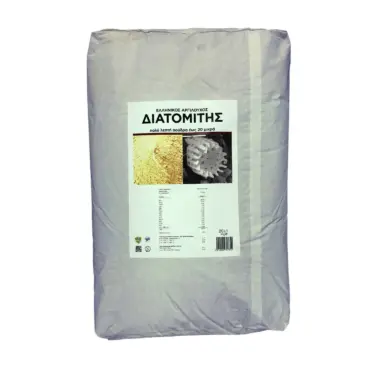 For storage and barns · 20 kgGreek clay diatomite – Very fine powder 20 microns – Natural insecticide for insects and mites – 20 kg★★★★★ (4)42,90 €View →
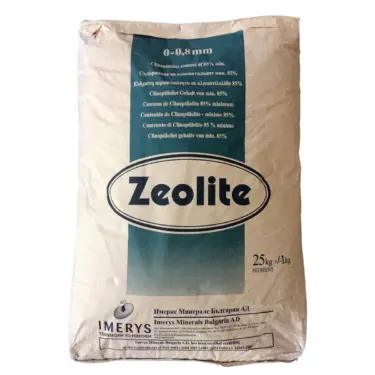 Feed + bedding · 2%Zeolite up to 0.8 mm – Powder for livestock use, animal feed and bedding, FAMIQS certified – 25 kg★★★★★ (2)18,90 €View →
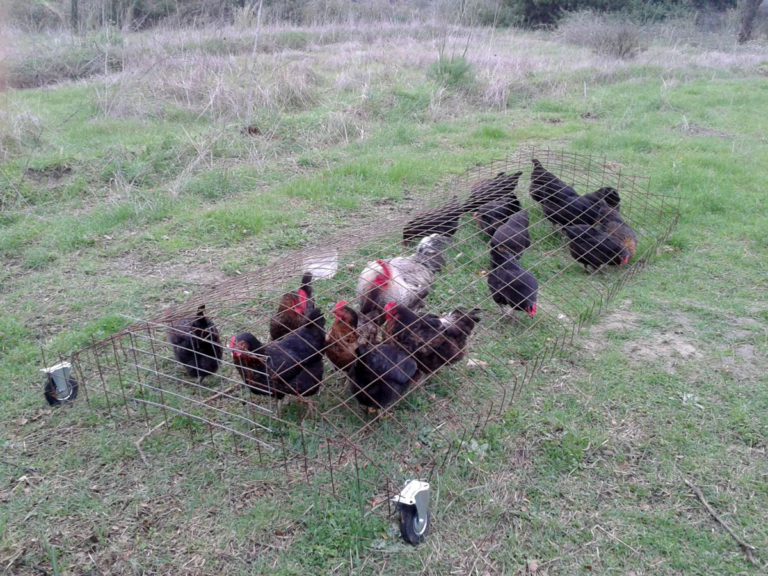
![Zeolite for broiler chickens in Ioannina [Video]](https://zeolife.gr/wp-content/uploads/2019/08/zeolite-broiler-chicken-1200x900px-768x576.jpg)