Germline transformation of the olive fly Bactrocera oleae using a versatile transgenesis marker
M. Koukidou1*†, A. Klinakis1*†‡, C. Reboulakis§, L. Zagoraiou*†¶, N. Tavernarakis*, I. Livadaras*, A. Economopoulos§ and C. Savakis*†
*Institute of Molecular Biology and Biotechnology, Foundation for Research and Technology, Heraklion, Crete, Greece; †Medical School and §Department of Biology, University of Crete, Heraklion, Greece
Abstract
The olive fruit fly (olive fly) Bactrocera oleae (Dacus), recently introduced in North America, is the most destructive pest of olives worldwide. The lack of an efficient gene transfer technology for olive fly has hampered molecular analysis, as well as development of genetic techniques for its control. We have developed a Minos-based transposon vector carrying a self- activating cassette which overexpresses the enhanced green fluorescent protein (EGFP). Efficient transposase- mediated integration of one to multiple copies of this vector was achieved in the germ line of B. oleae by coinjecting the vector along with in vitro synthesized Minos transposase mRNA into preblastoderm embryos. The self-activating gene construct combined with trans- posase mRNA present a system with potential for transgenesis of very diverse species.
source: tavernarakislab.gr
Products from this article
Everything for farming in the shop → For olives · 2.5–5 mm gravelGreek Thracian zeolite from 2.5 to 5 mm – Gravel, ideal for incorporation into large-scale crops – 25 kg★★★★★ (5)16,90 €View →
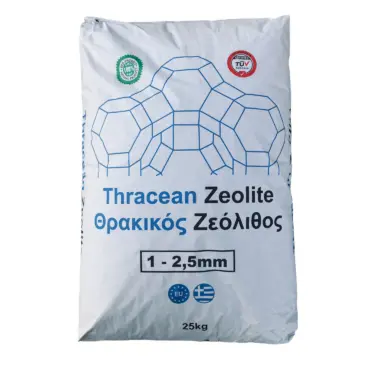 For young olive treesGreek Thracian zeolite from 1 to 2.5 mm – fine gravel, ideal for incorporation in small scale crops and medium to heavy soil – 25 kg★★★★★ (1)16,90 €View →
 Foliar and root sprayEcoPlant® – Soil and Foliar Improver – 1 litre★★★★½ (43)
![Incorporating zeolite into a vegetable patch and plant pots at Radio Evros in Orestiada [video]](https://zeolife.gr/wp-content/uploads/2014/02/zeolifegr-radio-evros-kipos.jpg)