
The application of natural zeolites in animal science and aquaculture – The Application of Natural Zeolites in Animal Science and Aquaculture
F. A. Mumpton and P. H. Fishman 1,2
Summary
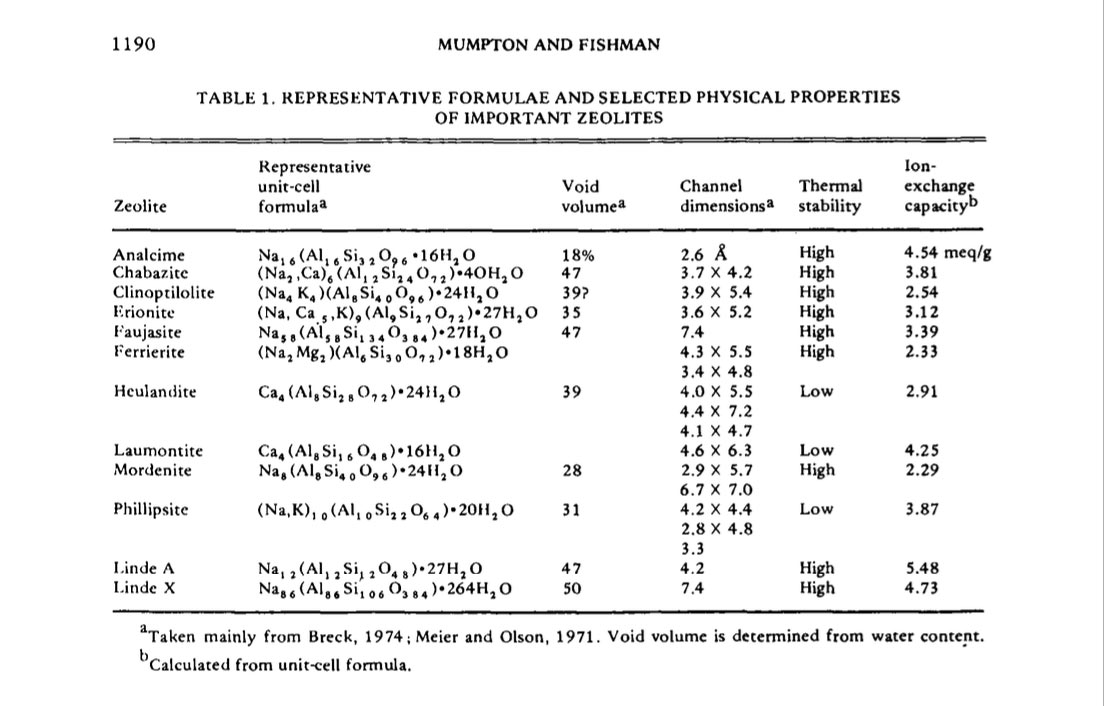
As agriculturalists step up their efforts to expand crop and animal production, numerous mineral materials are receiving greater attention as soil amendments and as dietary supplements in animal husbandry. The zeolite group of minerals stands out from the rest, and its exciting array of physical and chemical properties promises to contribute to many areas of agriculture and aquaculture over the next decade. Their abundance and availability have aroused considerable interest in research stations across several countries, although the number of publications and the amount of ‘hard’ data on their usefulness in agriculture remain limited. A review of this subject reveals that both the ion-exchange and adsorption properties of natural zeolites can be utilised to make more efficient use of feed nitrogen in animal nutrition, to reduce intestinal diseases prevalent in young pigs and ruminants, to control the moisture and ammonia content of animal manure, to purify recirculating hatchery water in aquaculture, to provide oxygen-enriched air for fish breeding and transport, and to reduce the nitrogen content of feedlot and hatchery runoff water.
Most of this research has been carried out in Japan, where zeolitic tuffs have been used for years to control the odour of animal waste and to raise the pH of acidic volcanic soils. The addition of approximately 10 per cent clinoptilolite to the diets of chickens and pigs appears to increase feed efficiency by as much as 25 per cent. Studies in Japan and the United States suggest that the incidence of diarrhoea in young pigs may be substantially reduced by adding zeolites to the animals’ rations. These same zeolites can be used to extract NH₄⁺ from animal waste and hatchery effluent via ion exchange. Numerous deposits of natural zeolites are known to exist in the US, totalling several hundred million metric tonnes. Their flat-lying nature and proximity to the surface suggest that a large supply of inexpensive zeolite is available to the industry at a price ranging from $50.00 to $75.00 per metric tonne.
Please view the PDF by using the ‘Full Text (PDF)’ link under ‘View’ on the left. Copyright © 1977. American Society of Animal Science. Copyright 1977 by American Society of Animal Science.
source: animalsciencepublications.org
Products from this article
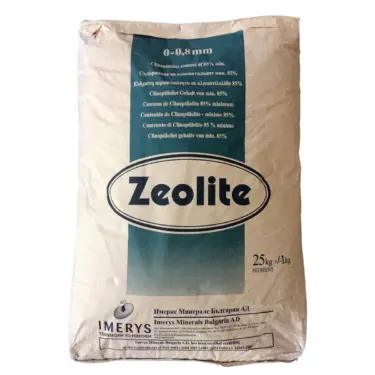 Ammonia bindingZeolite up to 0.8 mm – Powder for livestock use, animal feed and bedding, FAMIQS certified – 25 kg★★★★★ (2)18,90 €View →
 Aquarium filter mediaAquaClean® – Aquarium filter media containing zeolite – 2 x 300ml★★★★★ (1)14,90 €View →
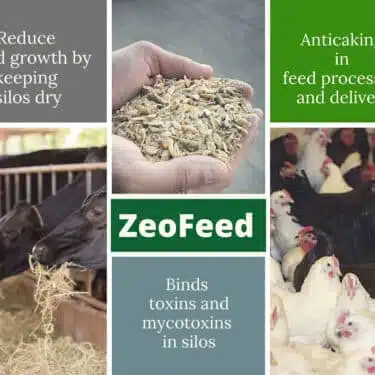 In feed · 1%Zeofeed® – Activated zeolite, up to 50 microns – Extremely fine powder, ideal for livestock use, FAMIQS-certified – 25 kg23,90 €View →


![N. Lygeros – Zeolite for combating crop diseases, applications and uses in medicine [Photos] [Video]](https://zeolife.gr/wp-content/uploads/2014/07/20140718_sotira.jpg)