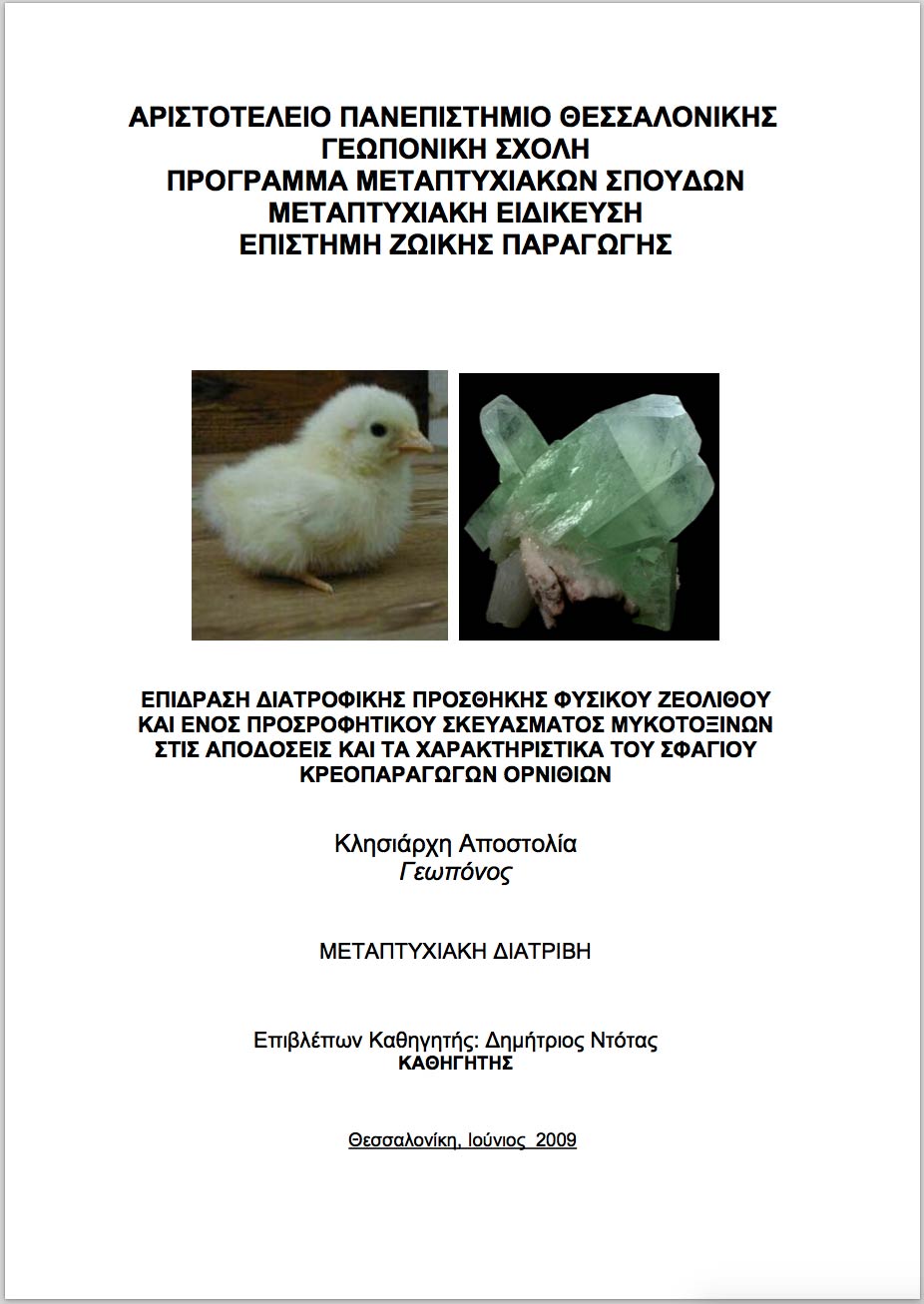
Effect of dietary supplementation with natural zeolite and a mycotoxin-adsorbing preparation on the performance and carcass characteristics of meat-producing poultry
Author
Klisarchi, Apostolia Evangelou
Date of publication: 2009
Faculty/Department: Aristotle University of Thessaloniki, Faculty of Science, Department of Biology
Supervisor: Dotas, Dimitrios.
Abstract
To study the yields and characteristics of the carcasses of meat-producing poultry, to whose diets three (3) levels of natural zeolite or one (1) commercial mycotoxin-adsorbing preparation were added, a comparative feeding trial was conducted with a total of 480 Ross-type broilers, from day-old chicks up to 42 days of age. The birds were reared on the floor in a closed poultry house with a controlled environment. Root bark was used as litter. The prescribed programme for vaccination, lighting and heating was followed throughout all phases of the experiment. Feed and water were provided ad libitum. The 480 chicks in the experiment were randomly allocated to five (5) dietary treatments. Each treatment group comprised 4 replicates of 24 chicks each. The experiment was divided into three periods: period A (days 1–14), period B (days 15–28) and period C (days 29–42, slaughter age). During the 42 days of the experiment, the chickens in group M (Control) group were fed a standard commercial broiler feed mixture based on wheat, maize and soya meal. The hens in the second treatment group were fed the control mixture with the addition of 2.5 kg of a commercial mycotoxin-adsorbing preparation (Agrabond, AB by Lapafarm S.A.) per tonne of feed. The hens in the remaining three treatment groups were fed the control mixture with the addition of natural zeolite (Polymorphic Power) at proportions of 1, 2 and 3 per cent, respectively. Thus, the five dietary groups formed were as follows: M, AB, Z1, Z2, and Z3.
CONCLUSIONS
From the above, the following conclusions can be drawn:
The final body weight and growth rate of the chickens were significantly higher (P<0.05) in the Z2 and Z3 treatments compared with the control and the other treatments.
Better feed utilisation was observed in the treatments with the highest zeolite inclusion rates (Z2 & Z3), compared with the other treatments.
The yield of hot and cold carcasses, the content of edible tissue and bones in the carcass, as well as the content of protein, fat, moisture and ash were not affected by the inclusion of zeolite or the mycotoxin adsorbent in the diets.
The colour of the carcass, in the breast and thigh, became progressively lighter as the zeolite content of the feed increased.
The moisture content of the hens’ droppings was not affected. In contrast, the addition of zeolite and a mycotoxin adsorbent contributed to a significant reduction in litter moisture.
Finally, the fracture resistance of the femur increased significantly in the treatments containing zeolite, compared with the control and the AB treatment.
Products from this article
Everything for livestock → In feed · 1%Zeofeed® – Activated zeolite, up to 50 microns – Extremely fine powder, ideal for livestock use, FAMIQS-certified – 25 kg23,90 €View →Granular 0.5–1 mmZeofeed® 0.5 to 1 mm – 25 kg23,90 €View →
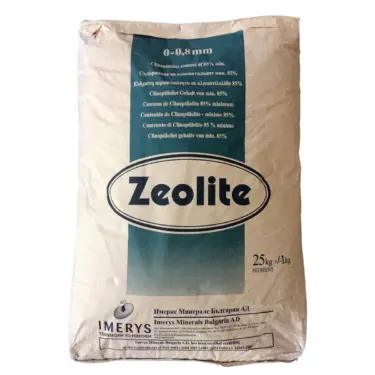 For the house litterZeolite up to 0.8 mm – Powder for livestock use, animal feed and bedding, FAMIQS certified – 25 kg★★★★★ (2)18,90 €View →