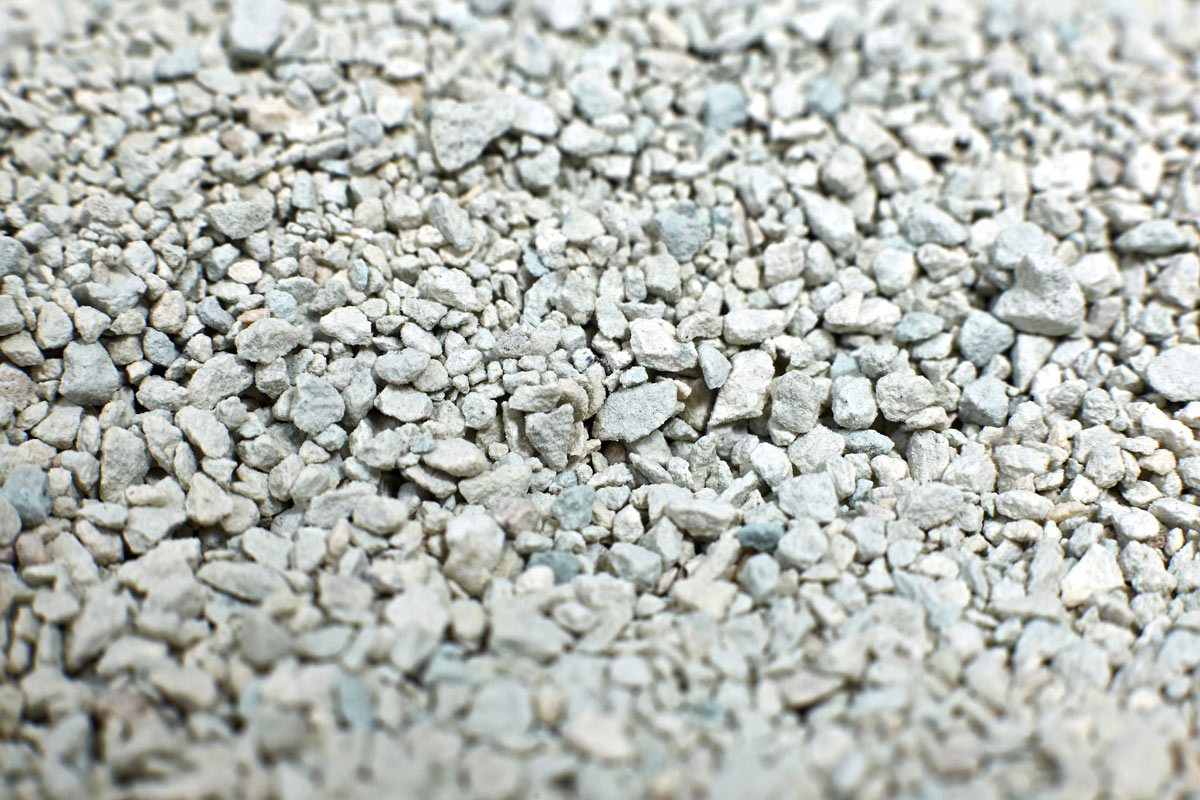
How to Calculate the Zeolite Dosage per Crop & Soil Type
Zeolite works — but only if you apply the right amount. Too little? You miss out on the benefits. Too much? A waste of money. In this guide, you’ll learn how to calculate the exact dose of zeolite for your agricultural application based on three factors: crop, soil and product purity.
🧮 Do you just want the correct dosage without reading the whole article?
The free Dosage Guide calculates it for you — 10 crops, 3 zeolite producers, 3 soil types, automatic discount.
Why correct dosage is important
Natural zeolite (clinoptilolite) is a mineral with a three-dimensional channel structure that acts as a ‘store’ for nutrients in the soil. It retains ammonium, potassium, water and heavy metals, and gradually releases them to the plants (slow-release effect).
However, the dosage must be precise. Here’s why:
- 🔻 Under-dosing: It is not enough to alter the soil’s CEC — you miss out on the benefits.
- 🔺 Over-dosing: A waste of money (zeolite isn’t cheap). Part of the zeolite remains inactive and goes to waste.
- ⏱️ Incorrect strategy: Applying the entire dose in a single year = uneconomical. It’s better to spread it over 3 years.
Dosage per crop
Below you’ll find the official dosages per crop. The figures apply to IMERYS zeolite and ZeoGravel® (purity ≥85% clinoptilolite):
| Crop | Per stremma | Per unit |
|---|---|---|
| 🫒 Olive trees | up to 600 kg | 8–24 kg/tree |
| 🍎 Fruit trees | up to 450 kg | 5–15 kg per tree |
| 🍇 Vines | up to 450 kg | 0.4–1.2 kg per vine |
| 🥜 Walnut trees | up to 600 kg | 8–24 kg/tree |
| 🌾 Cereals / Maize | up to 300 kg | — |
| 🌿 Existing lawn | 100 kg | — |
| 🌱 New lawn | 300 kg | — |
| 🌴 Palm trees | — | up to 24 kg per tree |
| 🌹 Ornamental plants (garden) | — | 30–120 g/plant |
| 🌹 Ornamental plants (potted) | — | 5–20 per cent by soil weight |
| 🌱 Seed production | — | 20 per cent by soil weight |
| 🌵 Cacti / Succulents | — | 20% by soil weight |
Calculation examples
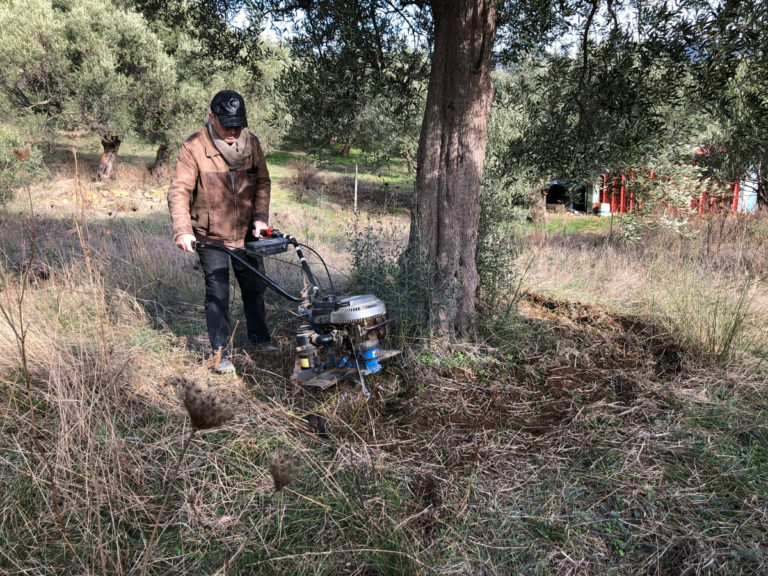
Example 1 — A 5-stremma olive grove with 100 mature trees
- Dosage per tree: 24 kg (mature)
- Total dose: 100 × 24 = 2,400 kg
- First year: 40% = 960 kg (38 25-kg sacks)
- Discount: 30% (automatically applied to the basket)
Example 2 — 10 stremmata of cereals
- Rate per stremma: 300 kg
- Total application rate: 10 × 300 = 3,000 kg
- First year: 40% = 1,200 kg (48 sacks)
- Discount: 40% (40+ sacks)
Selecting particle size distribution by soil type
The soil type determines which zeolite particle size to choose. This is crucial for effectiveness:
| Soil type | Characteristics | Recommended particle size distribution |
|---|---|---|
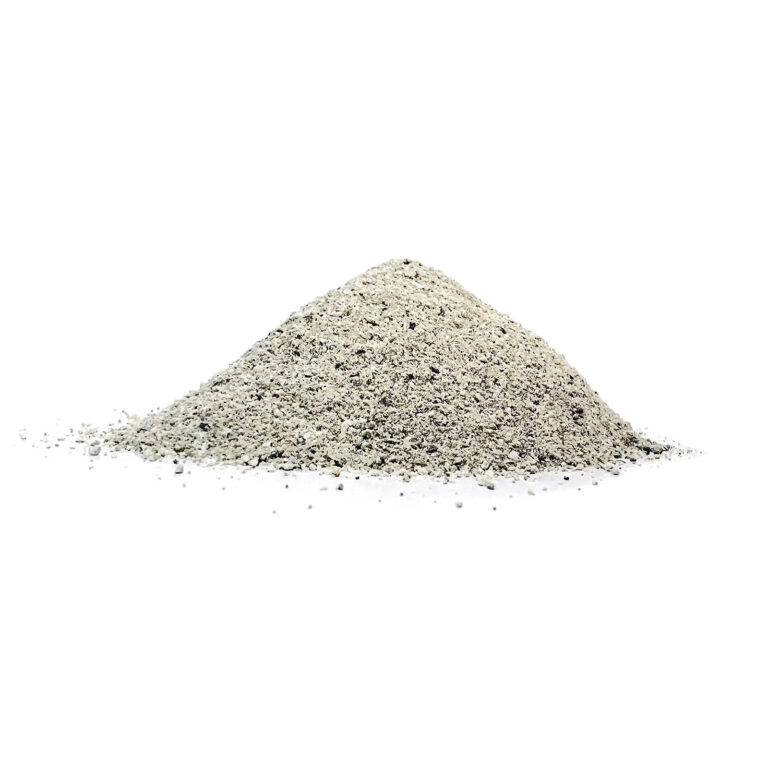
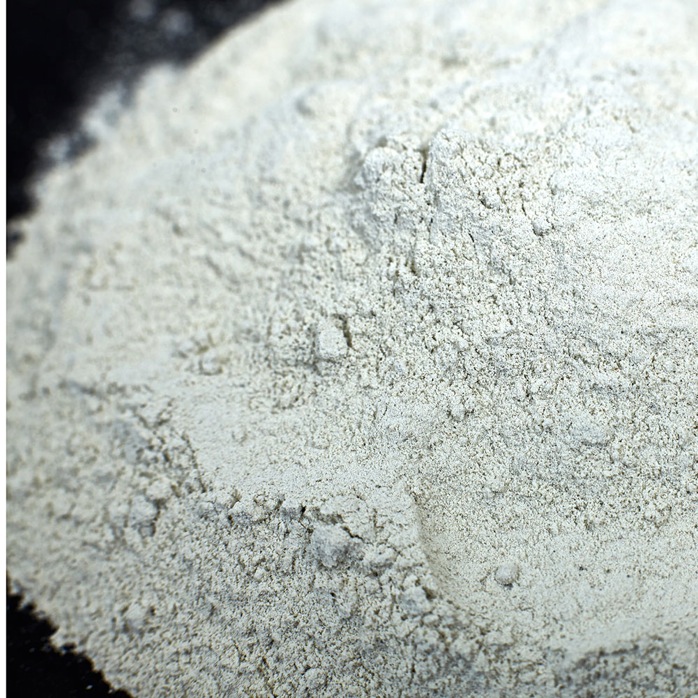
| 🟡 Light | Sandy, loose, drains easily | Fine particles (≤1 mm or ≤0.8 mm) with or without incorporation |
| 🟠 Medium | Clayey, well-balanced | Fine gravel (1–2.5 mm) |
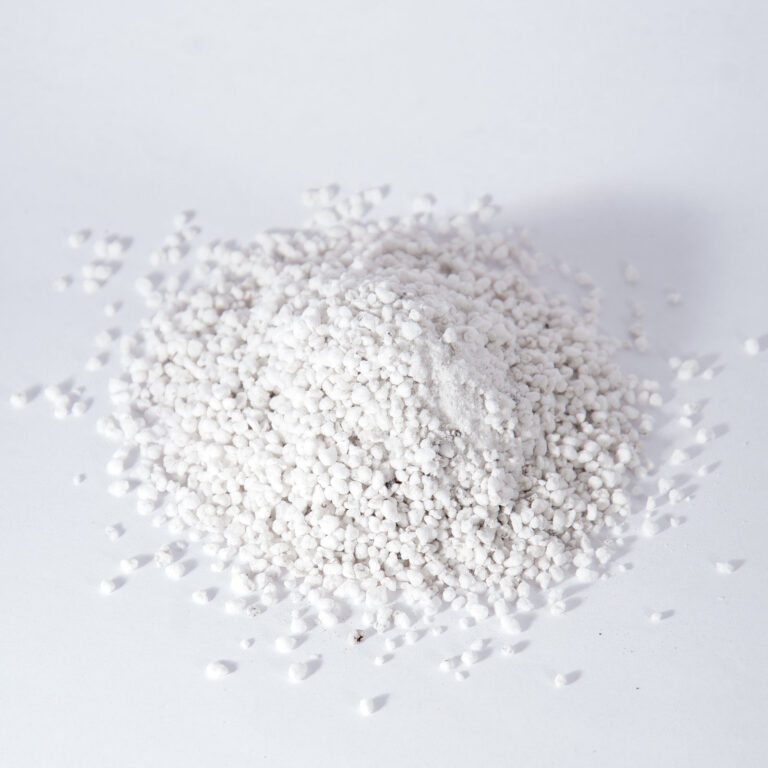
| 🟤 Heavy | Clayey, compacted | Gravel (2.5–5 mm) |
How to identify your soil type
Take a small amount of damp soil in the palm of your hand and squeeze it:
- It crumbles easily and is granular → light (sandy)
- It forms a ball that breaks apart → medium (loamy)
- It becomes a sticky lump that doesn’t break apart → heavy (clayey)
Differences in dosage between the 3 brands
At Zeolife.gr, we stock three different ranges of agricultural zeolite:
| Brand | Particle sizes | Purity | Modifier |
|---|---|---|---|
| 🇬🇷 Greek Thracian | 0–1 mm, 1–2.5 mm, 2.5–5 mm | 80% clinoptilolite | ×1.2 (+20%) |
| ⭐ IMERYS | 0–0.8 mm, 0.8–2.5 mm, 2.5–5 mm | ≥85% clinoptilolite | ×1.0 baseline |
| ⚡ ZeoGravel® (ZEOCEM) | 1–2.5 mm, 2.5–5 mm | ≥85% + thermal activation | ×1.0 baseline |
When should we choose which one?
- 🇬🇷 Greek Thracian: Locally sourced, low transport costs, ideal for heavy soils.
- ⭐ IMERYS: Established quality, also available as an extremely fine powder (0–0.8 mm). Ideal for light soils.
- ⚡ ZeoGravel® ZEOCEM: Heat-treated — increased activity. Ideal for medium-textured soils.
The 3-year application programme
Zeolite is a long-term investment — its properties are activated by moisture and begin to take effect gradually. That is why we recommend phased application over 3 years:
| Year | Percentage | Rationale |
|---|---|---|
| 🟢 Year 1 (now) | 40% | Initial ‘loading’ of the soil — produces results quickly |
| 🟡 Year 2 | 30 | Supplementary dose — consolidates the improvement |
| 🟡 Year 3 | 30 | Final ‘boost’ — maximum effect |
After 3 years, maintenance is carried out with 15% of the initial dose every 2–3 years.
📅 Would you like an automatic 3-year plan for your farm?
The Guide provides a timeline with kilograms and sacks for each year.
When to apply zeolite
The application season depends on the crop:
| Crop | Best time | Method |
|---|---|---|
| 🫒 Olive trees | Autumn or early spring | Work into the soil to a depth of 10–15 cm around the root |
| 🥜 Walnut trees | Autumn | Work into the soil to a depth of 15–20 cm |
| 🍇 Vines | After the harvest | Work into the soil to a depth of 15–20 cm in the root zone |
| 🌾 Cereals | Before sowing | Incorporate 15–20 cm deep by ploughing |
| 🌿 Lawn | Spring or autumn | Top-dressing or incorporation |
Wholesale discount
The larger your order, the bigger the discount. All discounts are applied automatically at the checkout:
| Sacks (25 kg) | Kilos | Discount |
|---|---|---|
| 10–19 | 250–475 kg | 10% |
| 20–29 | 500–725 kg | 20% |
| 30–39 | 750–975 kg | 30% |
| 40+ | 1,000+ kg | 40 |
For orders over 23 tonnes, please call 2311 29 55 20 for a special wholesale price.
Frequently asked questions
How much zeolite is needed for one olive tree?
Between 8 and 24 kg of zeolite per olive tree, depending on its age:
- Young (0–5 years): 8 kg
- Middle-aged (5–15 years): 15 kg
- Mature (15+ years): 24 kg
The total dose is spread over 3 years (40%/30%/30%).
How much zeolite does one stremma of vineyard require?
Up to 450 kg per stremma, or 0.4–1.2 kg per vine, depending on age. First year: 40% (~180 kg per stremma).
What particle size of zeolite do I need?
It depends on the soil type:
- Light → Powder (≤1 mm)
- Medium → Fine gravel (1–2.5 mm)
- Heavy → Gravel (2.5–5 mm)
What is the difference in the dosage rates between the three brands?
IMERYS and ZeoGravel® ZEOCEM have the same dosage (≥85% clinoptilolite). Greek Thracian Zeolite has 80 per cent purity, so we use +20 per cent to achieve an equivalent result.
When should I apply zeolite?
For trees: autumn (Oct–Nov) or early spring before bud break. For cereals: before sowing. For vines: after the harvest. For lawns: in spring or autumn.
Is it compatible with organic farming?
Yes, 100% compatible. Natural zeolite is an unprocessed mineral (with the exception of ZeoGravel®, which has undergone only thermal activation, without the use of chemicals). Accepted by all organic farming certification bodies.
How long does zeolite remain effective in the soil?
Many decades. Unlike fertilisers, which are washed away by rain, zeolite is a stable mineral. It remains in the soil and continues to retain nutrients for the entire lifespan of the field.
Does it replace fertilisers?
No. Zeolite improves the absorption of fertilisers (by up to 30 per cent) but does not replace them. You carry on fertilising as normal, but the fertilisers are not lost through leaching.
🚀 Ready to get started?
Get a personalised recommendation for your crop and soil in less than 1 minute.
Related articles
Products from this article
Everything for farming in the shop → Gravel 2.5–5 mmGreek Thracian zeolite from 2.5 to 5 mm – Gravel, ideal for incorporation into large-scale crops – 25 kg★★★★★ (5)16,90 €View →
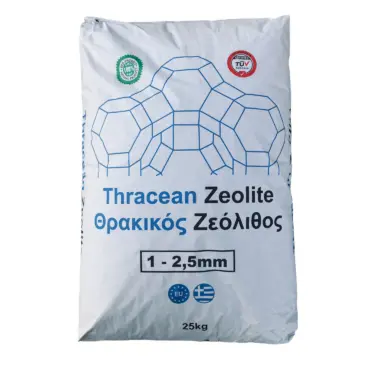 Fine gravel 1–2.5 mmGreek Thracian zeolite from 1 to 2.5 mm – fine gravel, ideal for incorporation in small scale crops and medium to heavy soil – 25 kg★★★★★ (1)16,90 €View →
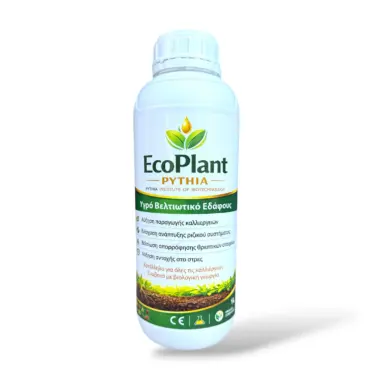 Foliar and root sprayEcoPlant® – Soil and Foliar Improver – 1 litre★★★★½ (43)