
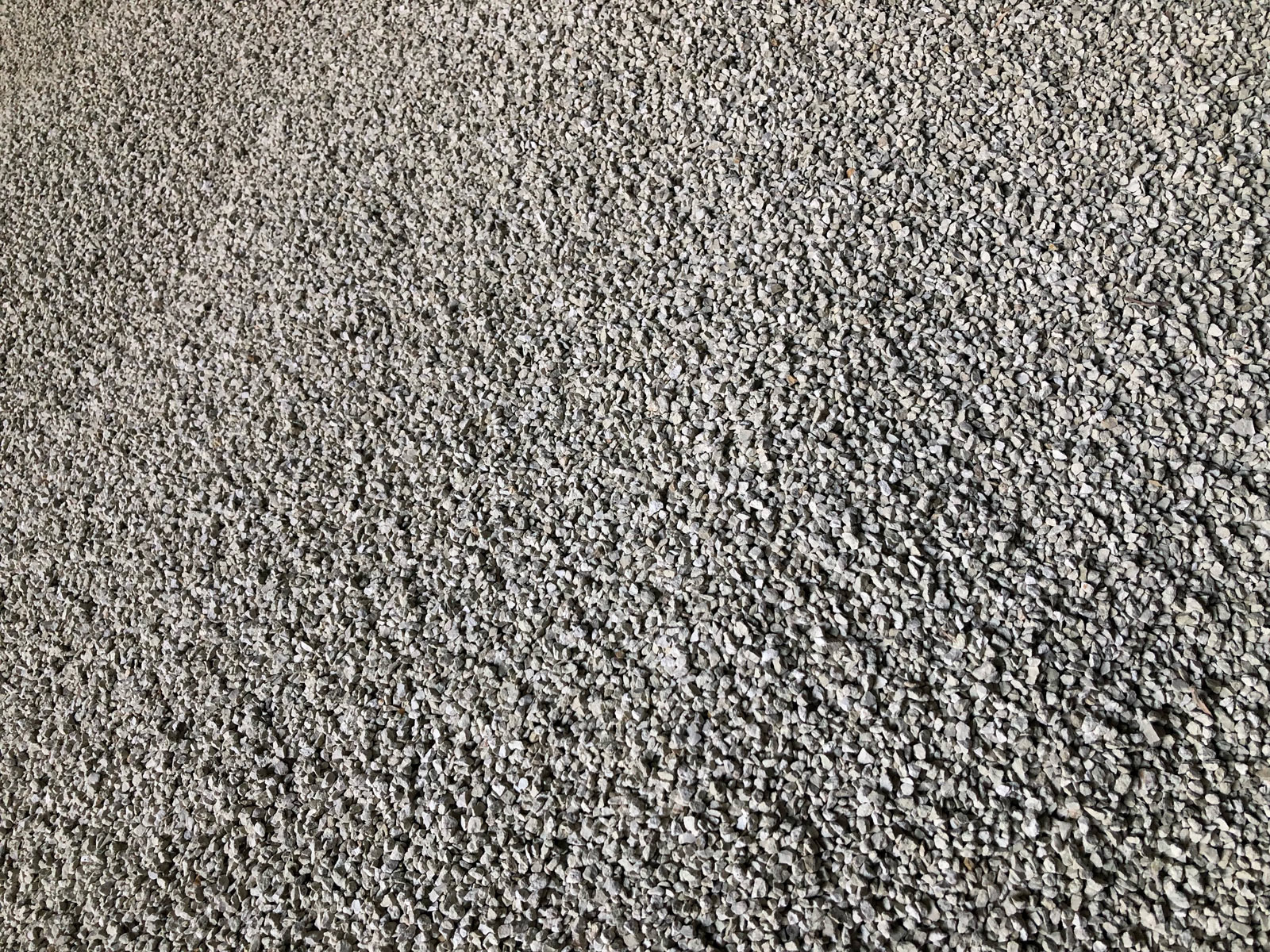
Zeolite – A superior material for purifying drinking water
Technology is changing and constantly evolving to meet humanity’s everyday needs. One of these needs is clean drinking water. The water treatment industry is researching, tests and develops new and improved methods for treating wastewater and drinking water that are both effective and environmentally friendly. Zeolite water filters can provide a sustainable, natural solution for the treatment of drinking water, effluent and wastewater.
Certain zeolites possess unique and exceptional physical and chemical properties. These characteristics make them very useful in a variety of applications, including agriculture, livestock farming, construction, various industrial processes, medicine and cosmetics. Recently, a more specific application of a natural zeolite, namely clinoptilolite, has been extensively studied in the context of water treatment and human health. Due to a range of positive health effects, including detoxifying properties, the use of clinoptilolite-based products has increased significantly in recent years.
A historical overview
For hundreds of years, people have used the resources provided by nature to improve their quality of life. Sometimes we use them in the form in which they are found in the environment, and at other times we discover new and innovative ways to apply them. For example, sand and charcoal are typical examples of this. These are already widely used in water treatment as filter media. Sand achieves this naturally anyway, by trapping various combinations of particles. Coal has mainly been regarded as a source of thermal energy in recent years. It is now used in a wide range of products for human health, from skincare to dietary supplements. It has also been shown to be an effective filtering material for water contaminated with toxins and other pollutants.
What is zeolite?
When volcanic rock or ash comes into contact with alkaline water, it reacts and can form zeolite. The word ‘zeolite’ has been widely used to describe different types of zeolites, tuffs and clays. In water treatment, the most common types are the aluminosilicate zeolites of the clinoptilolite family, which consist of varying concentrations of aluminium, silicon, oxygen and other elements such as calcium (Ca), potassium (K) and sodium (Na). Due to their structure and composition, they form micropores and possess a high cation exchange capacity. The extent of these exchange properties varies from one type to another and is noticeably weaker in natural zeolites due to possible impurities. However, zeolites can easily be produced synthetically from a heated solution of aluminium, silicon and sodium hydroxide. The mineral deposits of the most common zeolites found in nature are those containing clinoptilolite, in which the content is high (75 per cent or more).
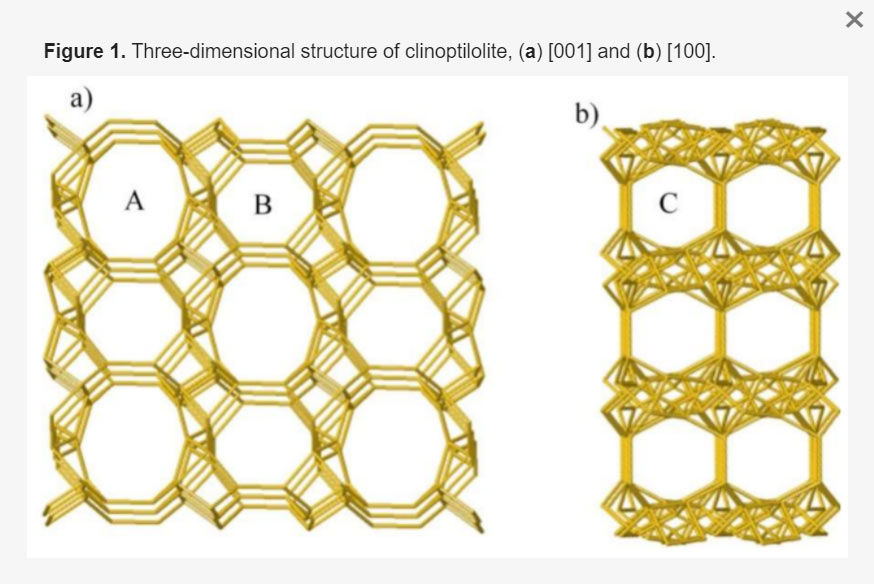
A unique advantage of clinoptilolite is its physical and chemical adsorption and catalytic properties. Clinoptilolite can absorb ammonia, nitrates, nitrogen, hydrogen sulphide, heavy metals, carbon, oxygen, oils and manganese (Mn). It also adsorbs strontium (Sr), lead (Pb), copper (Cu), silver (Ag), mercury (Hg) and many others. The main advantage of zeolite’s function lies in its physical/chemical adsorption, ion exchange and catalytic properties.
Catalytic properties of zeolite
- Uniform pore structure and large pore volume (crystalline symmetrical structure)
- Pore diameter range of 0.1–1.0 nanometres (nm)
- Ability to filter particles larger than 1 μm
- Large surface area
- Ability to reduce heavy metals, ammonium and hydrogen compounds
- Capable of adsorbing chemicals and petroleum by-products
Due to their unique physicochemical, adsorbent and ion-exchange properties, zeolites are among the most important inorganic cation exchangers. They are used in industrial applications for water and wastewater treatment, as catalysts and for the purification of nuclear waste. They are also used in agriculture, as animal feed additives, in domestic applications and in biochemical applications. The wide range of applications for zeolites is, in fact, a consequence of their porous structure. The pores form negatively charged channels and cavities, which are occupied by positively charged monovalent alkali (i.e. Na⁺, K⁺) and divalent (i.e. Ca²⁺) ions, OH⁻ groups or water molecules (H₂O), which can easily be exchanged for other molecules and cations from the environment. It follows, therefore, that the final silicon/aluminium (Si/Al in a zeolite determines its ion-exchange capacity and the attraction of the cations that remain in the pores and channels.
What makes zeolite a good filter material?
The more pores there are within the filter material, the more effective the filtration performance. Zeolites, and clinoptilolite in particular, have many pores; therefore, they not only trap molecules between their grains but also adsorb them onto their surface. This is partly due to zeolites’ cation-exchange capacity; in other words, they remove positive ions from the water (metals, sodium, ammonia) and replacing them with something else that was already attached to its ion-exchange sites.
Due to its high pore density, zeolite has a very large effective surface area, which means it can capture high concentrations of natural contaminants before it needs replacing. Filters can also use the adsorption process to capture and remove certain harmful particles.
The relationship between zeolite and ammonia and heavy metals
Ammonia and heavy metals pose a significant problem in the treatment of drinking water. Both of these contaminants are toxic to humans. Zeolite (specifically clinoptilolite) happens to have an affinity for these molecules and will adsorb and retain them within its molecular pores. It can achieve this even in the presence of other potentially competing ions.
Water softening
Hardness minerals such as calcium and magnesium can cause problems in water distribution pipework systems if they are present in sufficiently high concentrations. At a certain point, however, their concentrations in the water supply reach a level of supersaturation and they begin to precipitate. This can lead to build-up, which may cause restricted flow in pipes and taps. Zeolite is also capable of exchanging calcium and magnesium ions in the water, which means it can act as a water softener, provided it is first treated with a sodium/potassium brine solution to make it more effective.
Iron removal
If you have ever turned on the tap and the water that came out was brown, you may have a problem with iron. High levels of iron in water can pose a risk to human health. Therefore, it is also necessary to monitor iron levels in drinking water. Zeolite is also capable of reducing iron levels to a certain extent through its adsorption and ion-exchange properties.
Products from this article
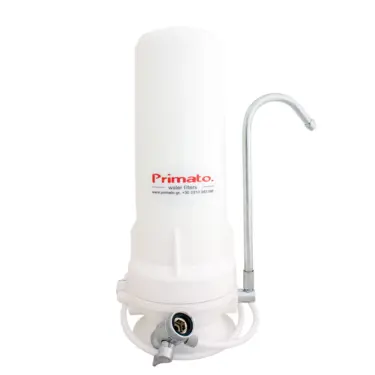 Countertop filterΦίλτρο νερού άνω πάγκου με ζεόλιθο και ενεργό άνθρακα – λευκό – 8000 λίτρα νερού – Primato GR-SKG-CT1WW★★★★★ (7)117,00 €View →
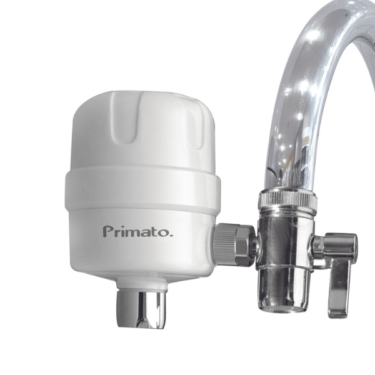 Tap filterΦίλτρο νερού βρύσης, με ζεόλιθο και ενεργό άνθρακα – 1500 λίτρα νερού – Primato USA-TF-WW50,00 €View →
 Under-sink filterUnder counter water filter with zeolite and activated carbon – 8000 litres of water – Primato USA1GB14 and DELUXE tap154,00 €View →