zeolite in the vineyard
[one_half]
zeolite
in the vineyard – an interview with Grigoris Azoridis | Zeolife.gr
[/one_half][one_half_last]
Numerous artefacts, inscriptions and wall paintings bear witness to the fact that the art of viticulture began thousands of years ago, evolving alongside humankind. The vine and its products, particularly wine, have been cherished throughout the world, and in our country they have become intertwined with customs, traditions and the joys of everyday life.
Soil quality is crucial for abundant fruiting and growth; the richer it is in nutrients, and the freer it is from chemical additives, the higher the quality of the produce will be.
[/one_half_last]
Natural zeolite
is a remarkable soil-improving mineral that has been used worldwide in agriculture for several years now with spectacular results, whilst in recent years its use has also begun in our country, particularly in viticulture.
It is one of the few natural materials that is negatively charged, and this gives it the valuable property of attracting positively charged particles, such as nutrients, and releasing them gradually, thus contributing to the uniform nourishment of the plants. This results in a reduction in the loss of nutrients, which are washed away by rainwater, but also by irrigation water into the lower soil layers, where the plants are unable to utilise them. This leads to better management of nutrients and fertilisers, resulting in savings of more than 50 per cent.
[one_half]
At the same time, zeolite
s enrich the soil with potassium, phosphorus and nitrogen and help to manage these nutrients more effectively. The incorporation of zeolite results in better soil aeration, leading to an improvement in the vine’s root system as well as an improvement in soil structure by reducing its compaction. At the same time, it cleanses the soil of heavy metals and toxic substances and neutralises soil acids, helping to balance the soil’s pH. Furthermore, its crystalline structure enables it to act as a ‘water reservoir’ for plants. It increases water absorption and retention in the soil, particularly in dry and sandy soils, and releases it gradually to the plant, thereby saving up to 50 per cent of irrigation water. In this way, zeolite
enables internal water management and consequently prevents the formation of ice, which is devastating for crops.
[/one_half][one_half_last]
zeolite
in the vineyard – an interview with Grigoris Azoridis | Zeolife.gr
[/one_half_last]
[one_half]
zeolite
in the vineyard – an interview with Grigoris Azoridis | Zeolife.gr
[/one_half][one_half_last]
Natural zeolite
can be used in organic farming as it is a 100% natural material, free from chemicals, which works perfectly with organic fertilisers and manure. The beneficial effects of natural zeolite are long-lasting, as it does not break down like other soil improvers, and it provides the vine with a range of beneficial effects. Studies conducted on the application of zeolite to vines have shown an increase in yield of up to 66 per cent.
There can be no doubt that natural zeolite
is the future of agriculture and a valuable ally to the modern farmer.
[/one_half_last]
Interview with grower Grigoris Azoridis
Mr Grigoris Azoridis
, a resident of Nea Orestiada in Evros, spoke to Zeolife.gr
about the results he observed after applying zeolite to his vineyard.
-First of all, Mr Azoridis, how did you find out about zeolite?
-As a nature lover, I support organic farming and was looking for an alternative solution to use on my crops whilst avoiding pesticides. My first encounter with zeolite was at the Zeolife.gr
shop, and I was delighted to see that there was such a shop in my town where I could find out more and buy zeolite.
[one_half]
-What grape varieties do you grow, and what problems were you facing?
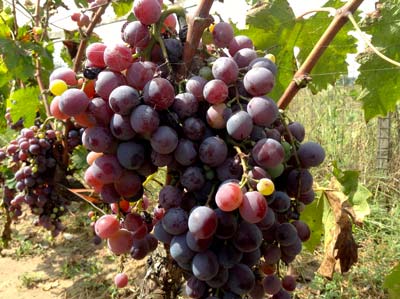
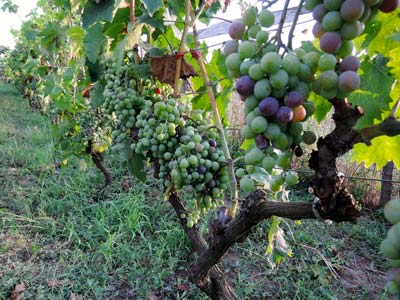
-I grow the Hamburg Muscat, Mavroudi of Thrace and Xinomavro, a Greek variety.
[/one_half][one_half_last]
zeolite
in the vineyard – an interview with Grigoris Azoridis | Zeolife.gr
[/one_half_last]
-How did you apply the zeolite?
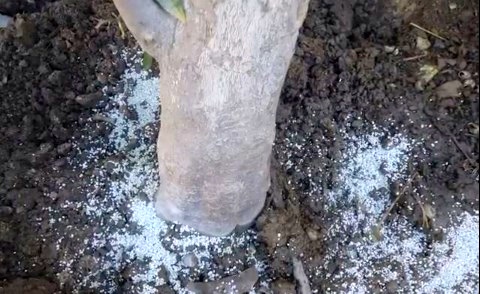
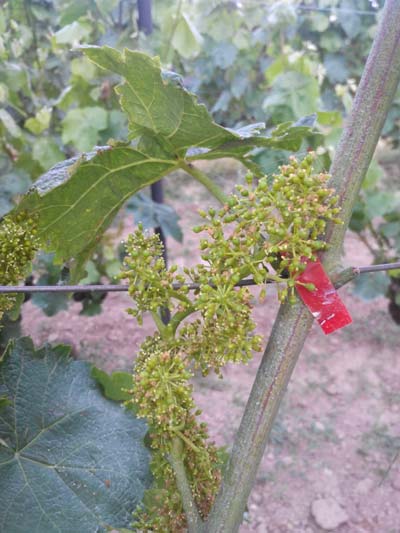
-I worked it into the soil, around the base of the plant, using about one cup of zeolite (300g). I then scattered some zeolite by hand onto the soil around the vines so that its properties could improve soil function. I did not spray the flowers so as not to wash away the pollen.
-What differences did you notice after applying the zeolite?
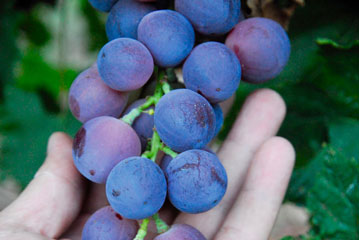
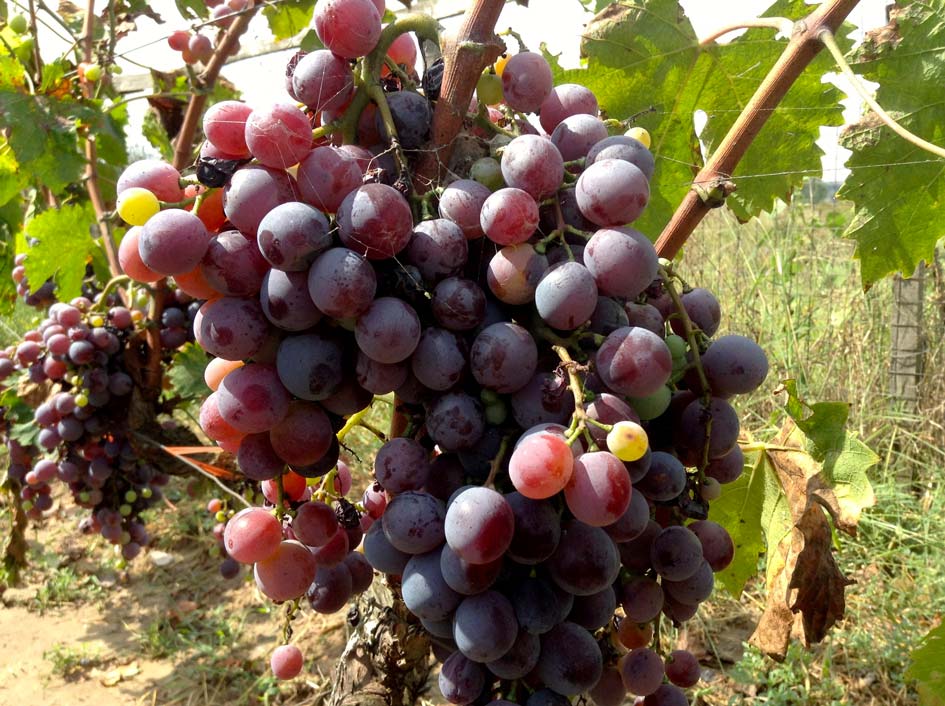
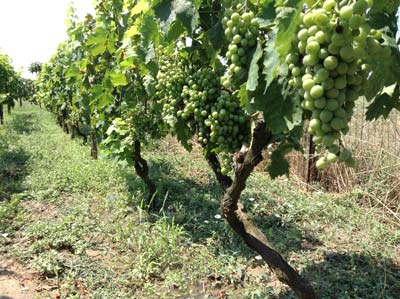
-I noticed vigorous growth and the shoots look healthier. The grapes are larger and have thicker skins. I also observed an increase in sugar content. The vine’s lush green leaves indicate good photosynthesis and that it doesn’t need much water. I only watered them twice. Furthermore, the fruiting period lasted longer than in previous years.
[one_half]

zeolite
in the vineyard – an interview with Grigoris Azoridis | Zeolife.gr
[/one_half][one_half_last]
-Do you use any other fertilisers, and what did you notice after applying zeolite?
-I use compost, Bordeaux mixture, a copper-based preparation and wettable sulphur. I carry out the spraying depending on the weather conditions. But now that I’m using zeolite, I’ve halved my use of the others. I haven’t needed to use them any more than that.
– Thank you very much.
– It’s my pleasure.
[/one_half_last]
Products from this article
Everything for farming in the shop → For vines · 2.5–5 mm gravelGreek Thracian zeolite from 2.5 to 5 mm – Gravel, ideal for incorporation into large-scale crops – 25 kg★★★★★ (5)16,90 €View →
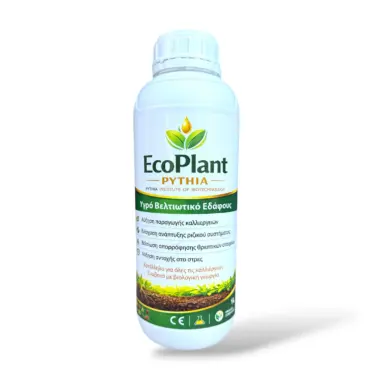 Foliar and root sprayEcoPlant® – Soil and Foliar Improver – 1 litre★★★★½ (43)
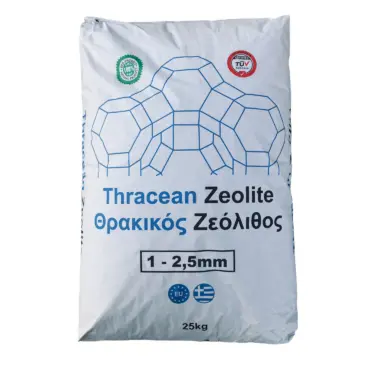 For vineyardsGreek Thracian zeolite from 1 to 2.5 mm – fine gravel, ideal for incorporation in small scale crops and medium to heavy soil – 25 kg★★★★★ (1)16,90 €View →