![Zeolites in cherry trees – Incorporation into young trees [Video]](https://zeolife.gr/wp-content/uploads/2019/01/zeolite-new-cherry-trees-3.jpg)
Zeolites in cherry trees – Incorporation into young trees [Video]
In this video, we visited Thourio in Nea Orestiada, where Mr Dimitris planted new cherry trees by adding zeolite to the planting hole.
How to plant new cherry trees with zeolite
- Add the zeolite to the soil – in this case, to the peat.
- Place a layer of the mixture at the bottom of the planting hole.
- Place the tree in the hole.
- Cover the root system with the mixture and soil from the field.
A particle size range of 2.5 to 5 millimetres was used, as the field soil is medium to heavy. The proportion of the mixture relative to the soil is 10 per cent by weight.
Last year’s planting without zeolite failed, so, following the advice of the agronomist in charge, zeolite and peat were added to the planting hole.
What is the purpose of incorporating zeolite when planting new trees?
The purpose of incorporating it is to manage water and nutrients in the area where the majority of the tree’s roots grow and absorb them.
This area, in theory, extends up to the tree’s crown once it has reached maturity. Therefore, the incorporation of zeolite should continue until a total of 15 kilograms per tree has been applied. This can be achieved by adding 5 kg each year for 3 consecutive years. The amount already applied to the root system at the time of planting is not included in the 15 kg.
At the same time as incorporating the zeolite, any fertiliser deemed necessary by the responsible agronomist may also be incorporated. It is also advisable to avoid the indiscriminate use of fertilisers and always to have a soil analysis carried out by a certified laboratory beforehand.
It is also worth noting that incorporating zeolite near the tree and the surface root system can be beneficial in many ways. One important benefit is the prevention of fungal growth. Due to zeolite’s ability to absorb water rapidly, it can prevent the formation of fungi.
Another important benefit is the change in the soil’s particle size distribution brought about by the addition of zeolite. If we add fine-grained zeolite to a light-textured field, we help it to retain more nutrients and water.
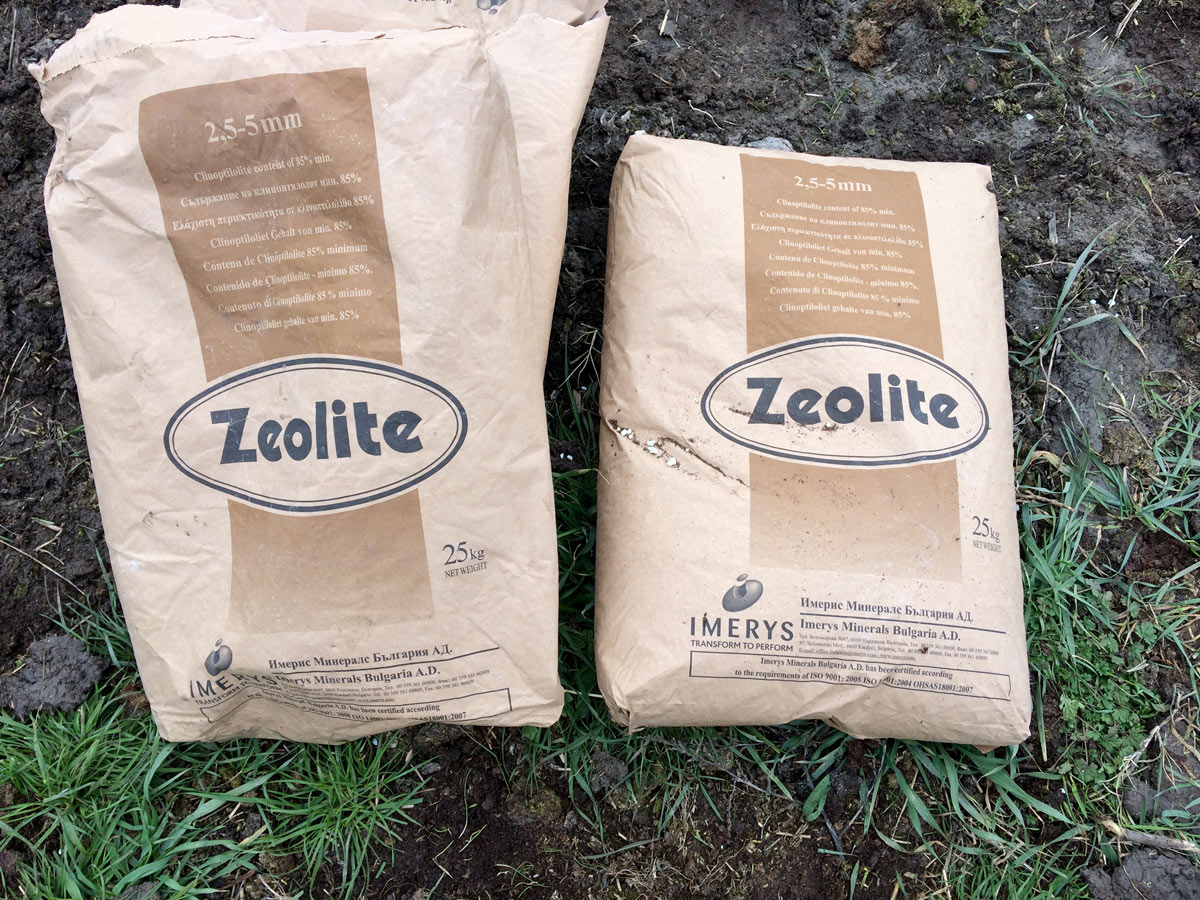
Conversely, in heavy soil, we would add zeolite of a larger particle size to help make it lighter, improve aeration and prevent the growth of fungi.
Equally important is balancing the pH, or active acidity, of a field that has been enriched with zeolite. Often, fields have an acidic or alkaline environment, which can hinder the absorption of fertilisers and water by the crops. zeolites always work to balance this environment and make it neutral.
Read this article to find out how to incorporate zeolite into existing trees.
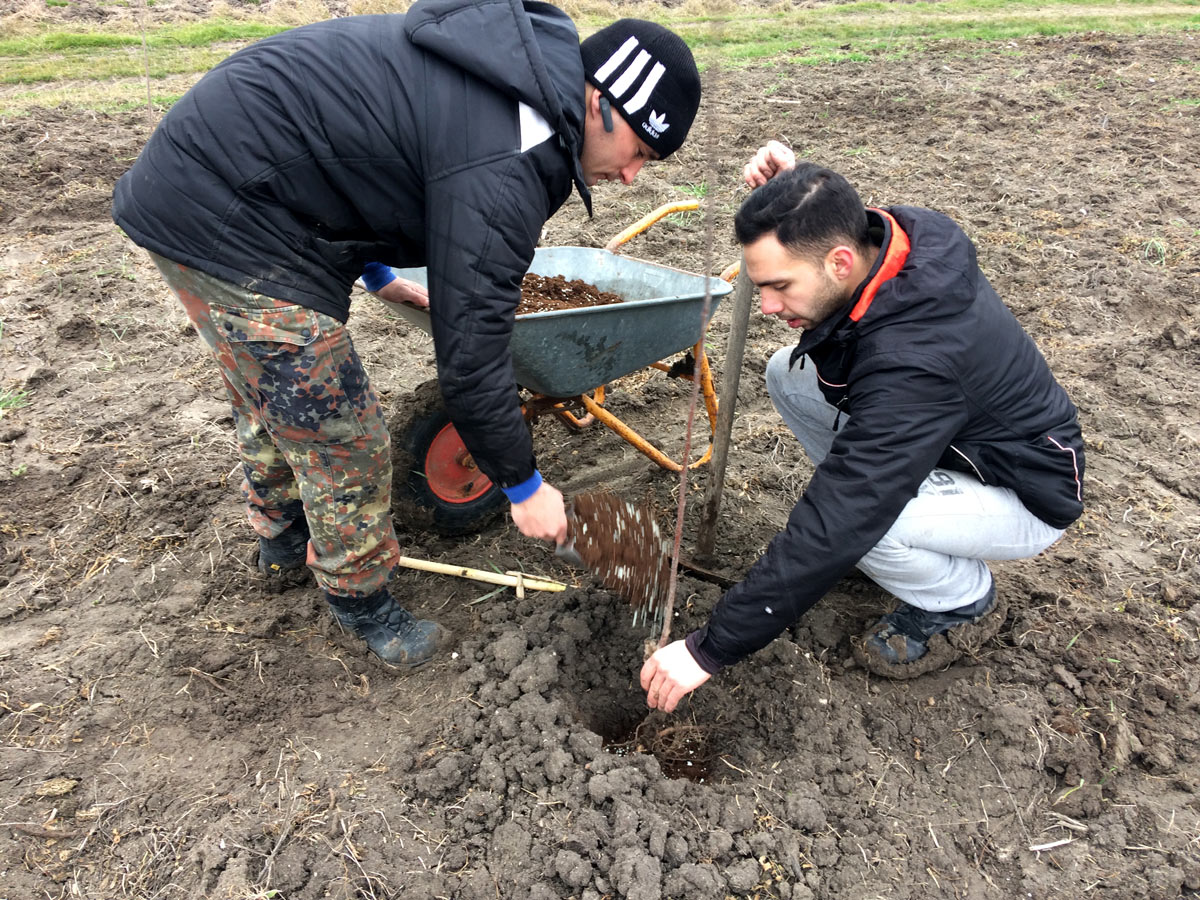
Some trees were replanted and others were replaced with new ones. The variety used is ‘Black Star’.
![Ζεόλιθος στα κεράσια - Eνσωμάτωση σε νέα δέντρα [Video]](https://zeolife.gr/wp-content/uploads/2019/01/zeolite-new-cherry-trees-4.jpg)
Products from this article
Everything for farming in the shop → For trees · 2.5–5 mm gravelGreek Thracian zeolite from 2.5 to 5 mm – Gravel, ideal for incorporation into large-scale crops – 25 kg★★★★★ (5)16,90 €View →
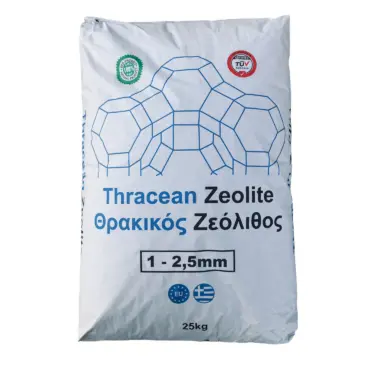 For young treesGreek Thracian zeolite from 1 to 2.5 mm – fine gravel, ideal for incorporation in small scale crops and medium to heavy soil – 25 kg★★★★★ (1)16,90 €View →
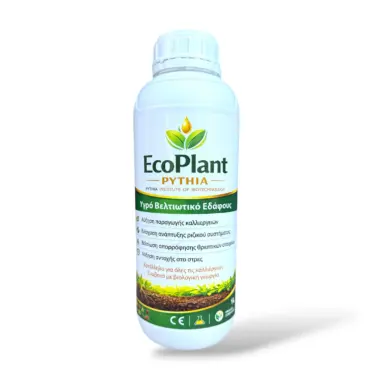 Foliar and root sprayEcoPlant® – Soil and Foliar Improver – 1 litre★★★★½ (43)
![Zeolites in wheat, following the processing of secondary cheese whey. [Study]](https://zeolife.gr/wp-content/uploads/2019/05/cheese-whey-zeolite-treatment-wheat-growth-2-768x666.jpg)
![Significant results from the use of zeolite in compost with earthworms [research]](https://zeolife.gr/wp-content/uploads/2018/06/natural-zeolite-vermicompost.jpg)